
Why Jersey Cows Are the Best Family Milk Cow for Homesteads
There’s just something about a Jersey cow.
Maybe it’s the soft brown eyes with those impossibly long eyelashes. Maybe it’s the creamy golden milk. Or maybe it’s the way an ordinary morning chore somehow starts feeling peaceful when it begins with warm milk hitting the bucket and steam rising in the cold air.
Jersey cows have become one of the most loved dairy breeds on modern homesteads, and after years of milking our own cows here in Kansas, I completely understand why.
If you spend much time around homesteaders, family milk cows, or people learning old-fashioned skills, you’ll notice Jerseys come up again and again. They’re manageable, efficient, beautiful, productive, and incredibly well-suited for small farms and families wanting to produce more food at home.
And while every dairy breed has strengths, Jerseys seem to hit a sweet spot that makes people absolutely fall in love with them.
What Is a Jersey Cow?
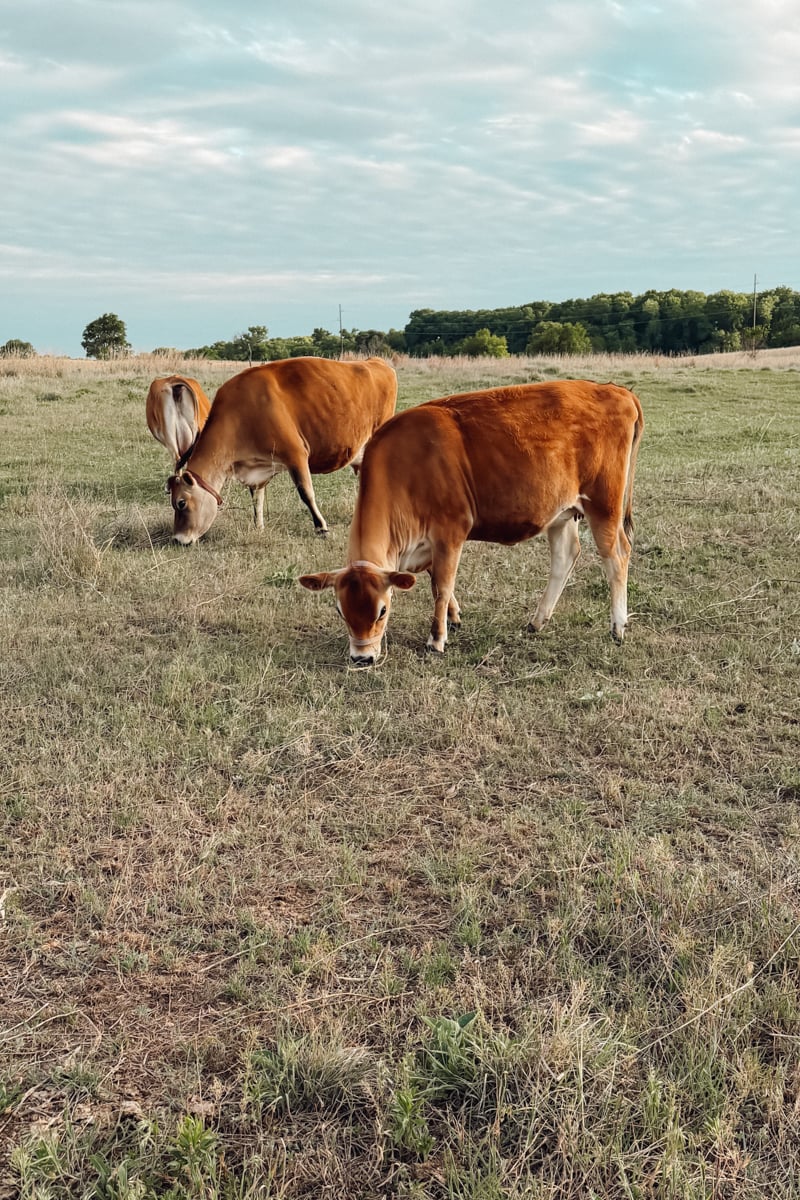
Jersey cows are a smaller dairy breed originally developed on the Island of Jersey in the English Channel. They’re known for their light brown coloring, gentle faces, smaller size, and especially rich milk.
Unlike the large black-and-white Holstein cows most people picture when they think of dairy farms, Jerseys are more compact and typically produce less milk overall, but the milk they do produce is incredibly rich in butterfat and cream.
That’s one of the biggest reasons homesteaders love them.
For a family milk cow, quality often matters more than sheer quantity.
And Jersey milk is famous for:
- thick cream lines
- rich flavor
- beautiful golden color
- excellent cheesemaking properties
- high butterfat content
- naturally creamy texture
If you’ve ever seen homemade butter that looks almost yellow like spring wildflowers, there’s a good chance it came from Jersey milk.
Why Homesteaders Love Jersey Cows
Their Milk Is Perfect for Homemade Dairy Products
This is probably the number one reason Jerseys become the favorite so often.
The cream.
When fresh Jersey milk settles in jars in the refrigerator, the cream line can be shockingly thick. Some mornings the cream line is so thick my boys joke it looks like melted ice cream sitting on top of the milk jars. I catch myself admiring it before skimming cream for butter, yogurt, or ice cream.
That fresh milk is incredible for:
If you’re interested in cheesemaking, Jersey milk is especially exciting because the higher butterfat and solids often produce beautiful texture and flavor in homemade cheeses. You can read more about Raw Milk vs. Pasteurized Milk if you'd like to learn more about how the type of milk you use plays a role in cheesemaking.
It’s one thing to buy cheese at the grocery store.
It’s another thing entirely to hold a wheel of cheese in your hands that came from milk you carried in from the barn that morning.
What Is A2/A2 Milk?
One of the reasons we intentionally chose A2/A2 Jersey cows is because I personally tolerate their milk much better than conventional grocery store milk.
Everyone’s body is different. But many people who experience discomfort with conventional milk report that they feel better drinking milk from cows that produce only the A2 beta-casein protein.
Most modern grocery store milk contains a mix of A1 and A2 proteins, while certain breeds, including many Jerseys, are more likely to naturally carry the A2/A2 genetics.
For our family, this was something we cared about when choosing a family milk cow. We specifically looked for strong dairy genetics, good temperament, and confirmed A2/A2 lines because we knew we wanted to consume the milk daily and use it heavily for homemade dairy products.
Whether the difference comes from the A2 protein itself, the freshness of the milk, the lack of heavy processing, or a combination of factors, I can only speak from personal experience: I tolerate our fresh Jersey milk completely differently than conventional store milk.
And interestingly, this is something I hear from many other family milk cow owners too.
Jersey Cows Tend To Be More Manageable for Small Homesteads
One of the biggest misconceptions people have about owning a dairy cow is that you need a giant commercial setup.
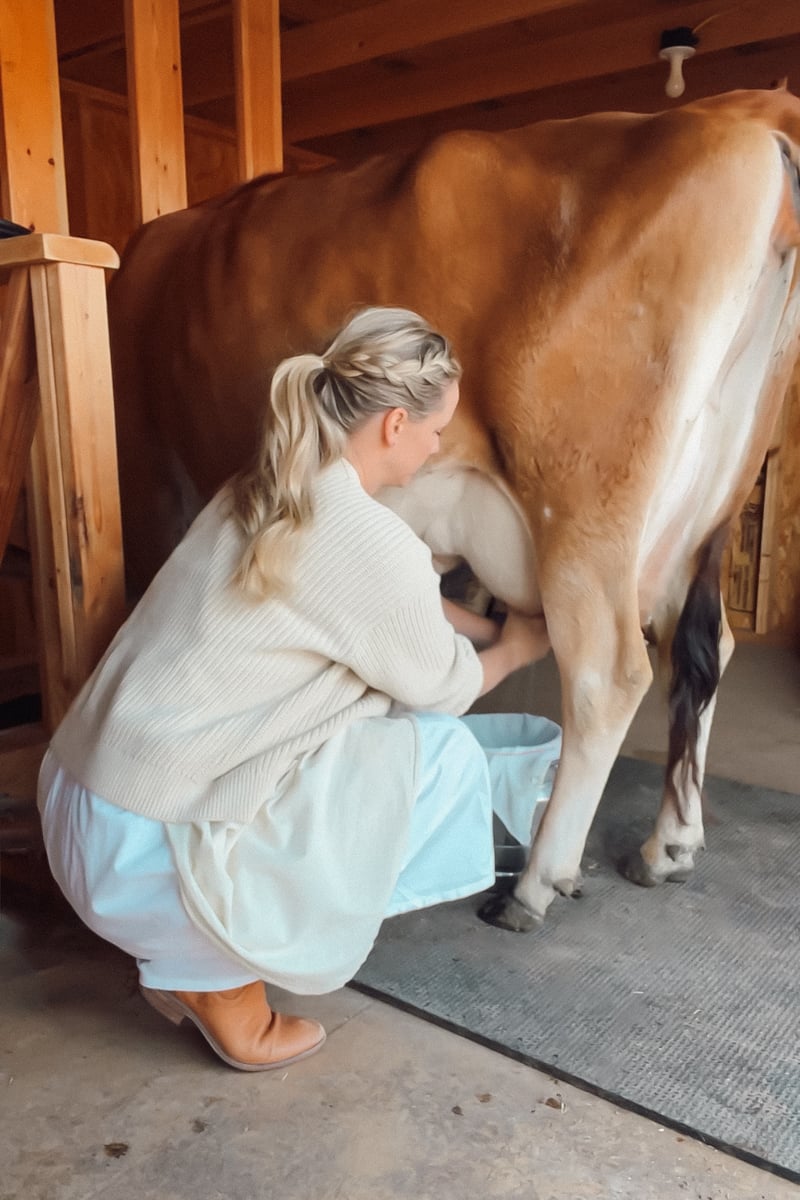
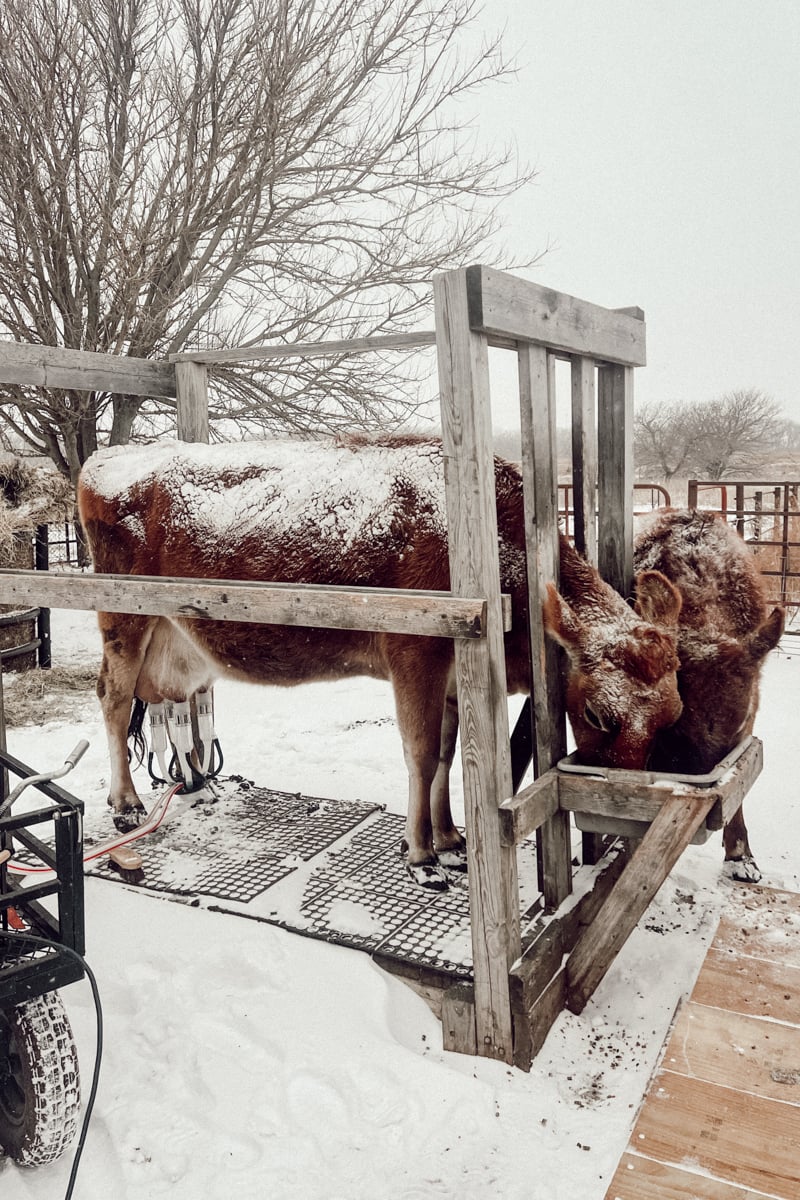
You don’t. Our indoor and outdoor milking stanchions are both very simple setups Aaron built himself in less than a weekend.
Many families successfully keep a single family milk cow on small acreage. Jerseys are especially popular for this because they’re smaller-framed than many other dairy breeds and often easier for beginners to handle.
That doesn’t mean dairy cows are “easy.” They still require:
- daily care
- fencing
- feed
- water
- routine
- milking
- veterinary care
- winter preparation
- pasture management
A dairy cow is absolutely a commitment. But Jerseys often feel more approachable for families learning the rhythm of home dairy production for the first time. They generally have calm temperaments and seem very aware of personal space, which can be especially helpful for women, children helping with chores, or anyone nervous about handling a very large animal.
My cow, Rosie, is so light-footed that she won't step on my hand, even if it's laying directly underneath her. She immediately senses it and adjusts her body. This isn't a hard and fast rule, though. My other cow, Spice, has no concept of personal space and still milks with a kick bar so that I don't get bumped or kicked, just in case!
How We Ended Up With Our First Jersey Cow
We were not ready for a dairy cow yet. At least not on paper.
We had always talked about getting a family milk cow “someday,” but in my mind, someday was still a few years away. We had the land, but not much else. Our 15+ acre pasture hadn’t been properly grazed in decades. The fencing was only partially intact because previous owners had removed sections over the years. We had no stock tank. No barn, lean-to, or real shelter setup. Just the absolute bare bones of what you’d want for cattle.
But then one of those opportunities showed up that you just know you’ll regret saying no to.
My friend Shelbey, who also happened to be my raw milk dealer at the time, mentioned she was planning to sell the calf from her family milk cow and asked if we might be interested.
The calf was seven months old, halter broke, gentle, and had beautiful genetics. Grass-fed lines, strong dairy structure, gorgeous udder conformation in the family line, excellent temperament… she was a unicorn. Even then, as beginners, I knew cows like that don’t just casually appear every day.
So despite not feeling fully prepared, we said yes.
We were about three years into a severe Kansas drought at the time, and when my husband and boys started trying to pound fence posts into the pasture, the ground was so hard the t-posts were literally bending instead of going into the soil.
So we improvised.
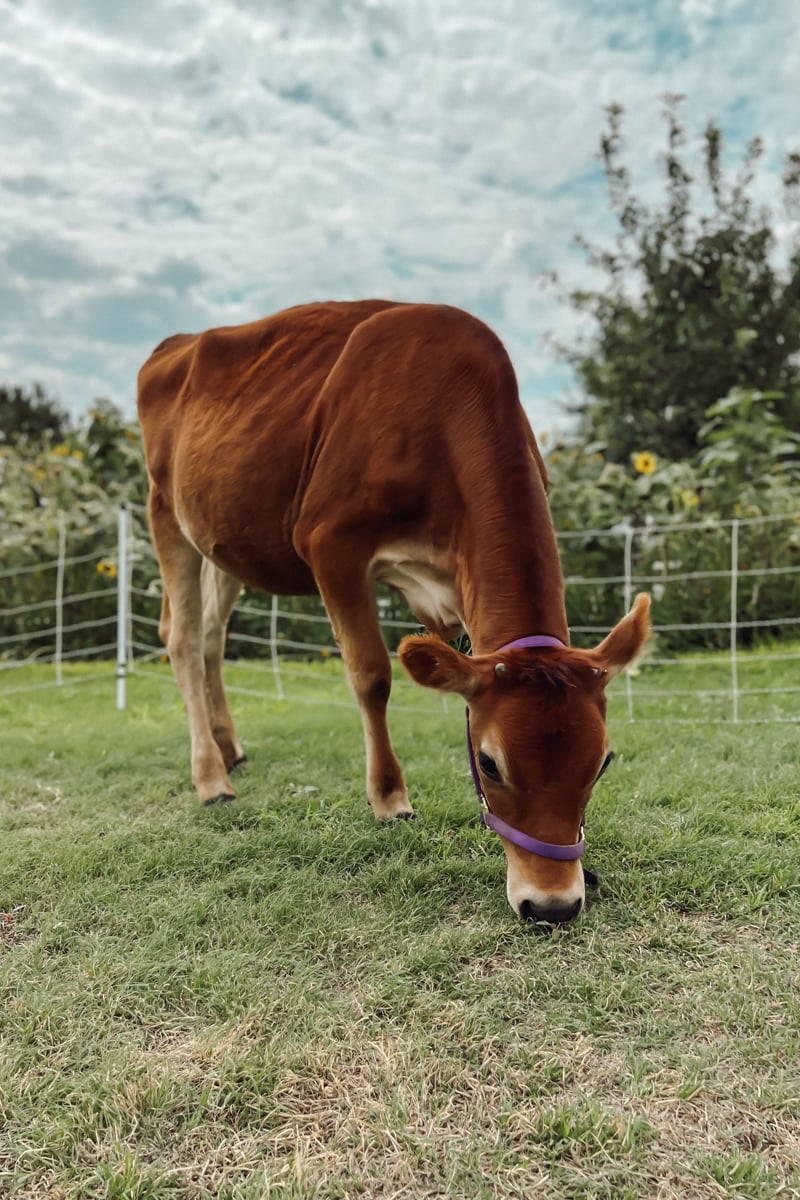
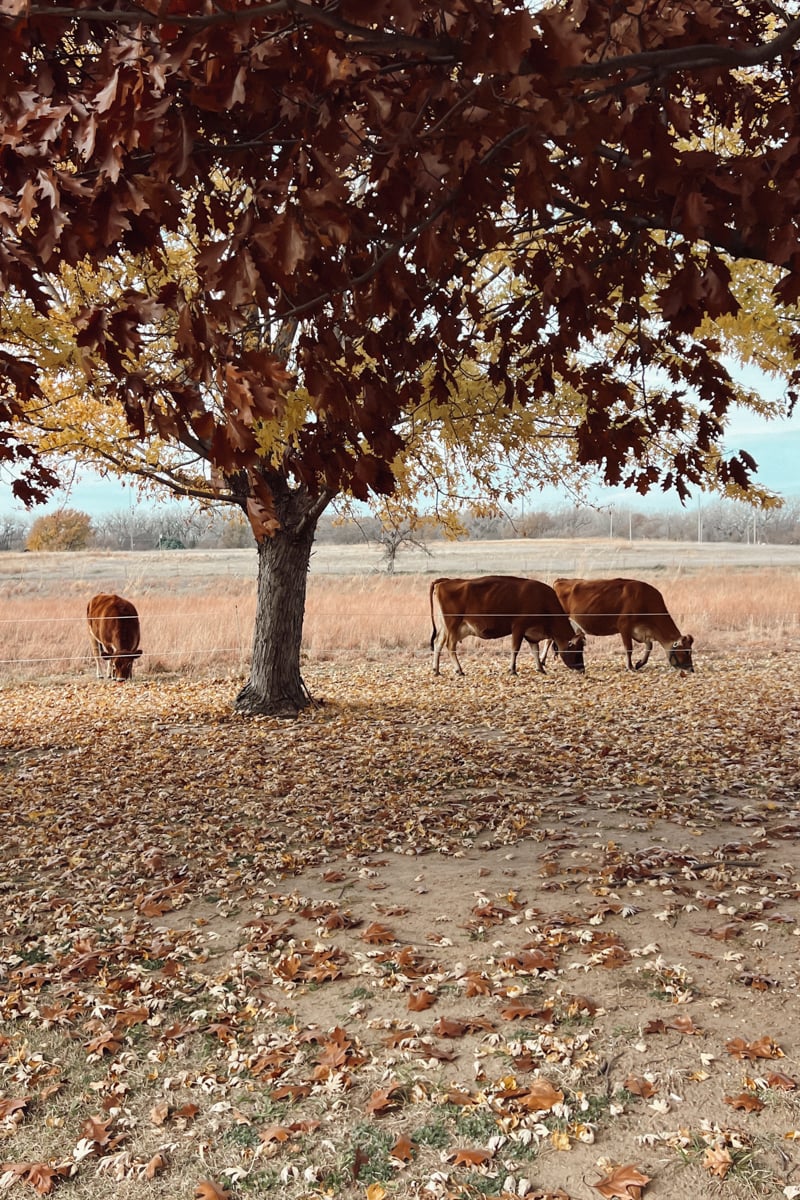
Instead of putting Spice into the unfinished pasture right away, we used portable electric hog netting and rotationally grazed her around our large mowed yard (pictured above).
She kept our grass short, fertilized the soil naturally, and every few days we’d simply move the fence to a fresh section. It worked beautifully while we slowly finished the permanent fencing that fall after we finally got rain.
The next spring we brought home Rosie.
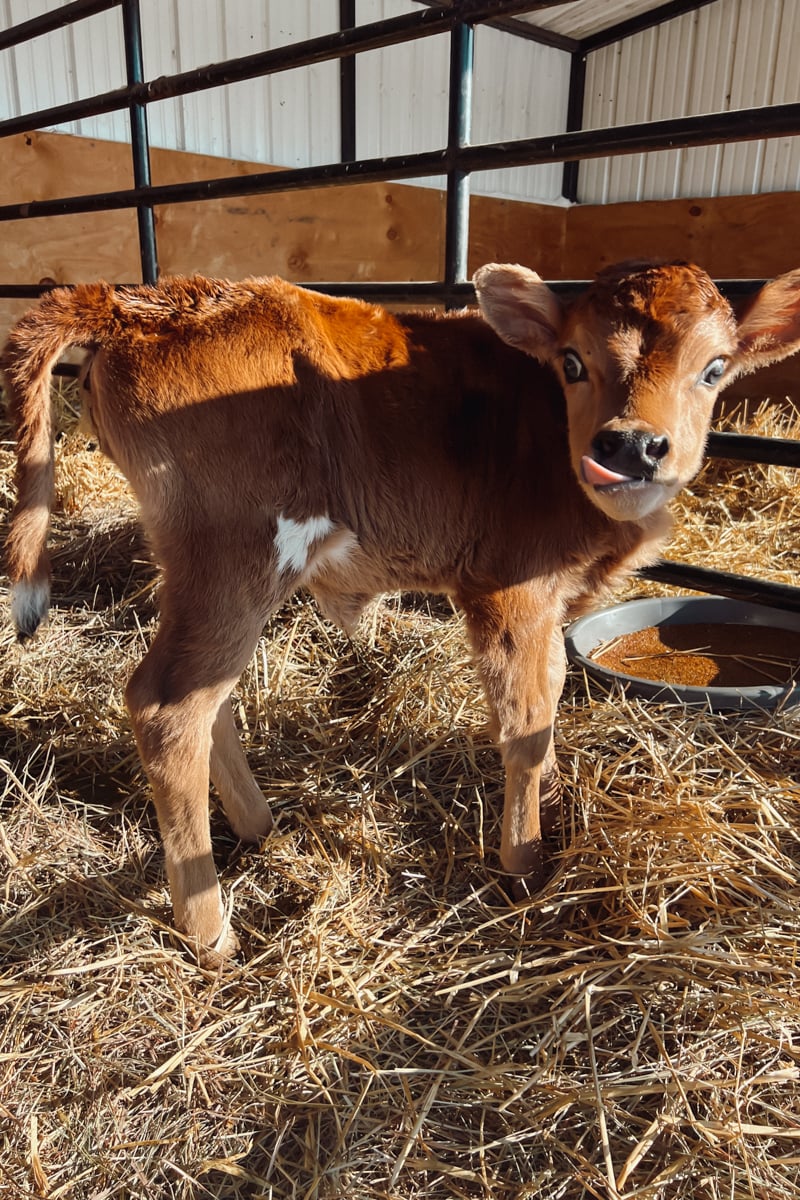
They Have Incredible Personalities
People joke that Jerseys act more like giant dogs than cattle sometimes, and they’re not entirely wrong.
Many Jerseys are curious, expressive, social, and deeply food-motivated. They quickly learn routines and often become attached to their people.
Our cows know exactly when milking time is. They know the sound of grain hitting the bucket. They know where they’re supposed to stand. And they absolutely know when I’m running late.
Like any animal, temperament varies from cow to cow, and proper handling matters tremendously. But overall, Jerseys have earned a reputation for being one of the friendlier dairy breeds for a reason.
Jerseys just tend to feel gentle and aware in a way that surprises people who haven’t spent much time around cattle.
Jersey Milk Is Beautiful
This might sound silly until you see it yourself.
But Jersey milk just looks different.
The cream is richer. The butter is yellower. The milk often has a warm golden tint, especially during seasons when cows are grazing fresh pasture.
That golden color comes largely from beta carotene in the milkfat. Unlike some breeds that convert more of it into vitamin A, Jerseys tend to leave more of that golden pigment intact.
The result is butter that almost glows.
The first time you make homemade butter from fresh Jersey cream, it feels a little like cheating.
A Family Milk Cow Changes the Way You Think About Food
This is the part people don’t always expect.
At first, many people want a dairy cow because:
- they want raw milk
- they want to make cheese
- they want more self-sufficiency
- they want healthier food
- they want to homestead more seriously
But somewhere along the way, it often becomes something deeper than that.
You start paying attention to seasons differently.
Soon you notice how spring grass changes the milk, how much work goes into producing even simple foods. You begin planning meals around abundance and learn how to preserve extra milk, stretch ingredients, and waste less. There’s something deeply satisfying about realizing the yogurt, butter, cheese, whipped cream, and ice cream in your kitchen all came from the same cow standing out in the pasture.
Are Jersey Cows Good for Beginners?
In many cases, yes.
There’s a reason so many homesteaders recommend Jerseys as one of the best dairy cow breeds for small farms and beginner families.
They’re often:
- easier to handle due to smaller size
- efficient milk producers
- excellent for homemade dairy products
- adaptable to smaller homesteads
- generally friendly and intelligent
That said, dairy cows are still livestock. They require knowledge, preparation, consistency, and infrastructure.
A milk cow ties you to home in ways many people don’t fully understand until they experience it themselves. Milking schedules matter. Feed costs matter. Vacations become complicated. Winter chores still happen in freezing wind. Calving can be the most exhilarating (or traumatic) experiences of your life.
Some days it’s peaceful and so satisfying. Other days it’s muddy, cold, and inconvenient. I'd be lying if I never thought about quitting or wondered what possessed me to take on this responsibility, usually when it's sub-zero and my face and hands are chapped and freezing.
But that’s part of keeping livestock. The animals still need to be fed and milked whether you’re tired, busy, sick, or freezing.

Why Jerseys Continue To Be the Homestead Favorite
There are certainly larger dairy breeds.
Breeds that produce more milk.
There are breeds with different strengths depending on your goals.
But Jerseys seem to uniquely combine:
- manageable size
- rich milk
- beautiful butterfat
- strong cheesemaking qualities
- gentle personality
- smaller homestead compatibility
- emotional charm
People just adore them.
Once you’ve stood in a kitchen skimming thick cream off fresh milk while a loaf of homemade bread cools on the counter, it becomes very easy to understand why so many homesteaders dream about owning a Jersey cow someday.
How Jerseys Compare to Other Dairy Cow Breeds
Every dairy breed has strengths, and the “best” family milk cow often depends on your goals, personality, climate, and how you plan to use the milk. Some families prioritize sheer milk volume, while others care more about butterfat, temperament, or managing a smaller animal on limited acreage.
Here are a few of the most common dairy breeds homesteaders consider:
Holsteins
Holsteins are the classic black-and-white dairy cows most people picture when they think of commercial dairy farms. They’re famous for extremely high milk production and can produce impressive amounts of milk each day.
For large families or people wanting maximum milk volume, Holsteins can be an excellent choice. But for smaller homesteads, the sheer amount of milk can feel overwhelming, especially if you’re also trying to manage cream, cheesemaking, and milk storage at home. They’re also a much larger-framed cow than Jerseys, so they require more feed and a bigger space. For example, my milking stanchion would NOT work for a holstein.
Brown Swiss
Brown Swiss cows are known for their calm temperaments, strong build, and excellent milk quality. Many people love them for their steady personalities and durability in colder climates.
Their milk is often prized for cheesemaking because of its protein structure, and they tend to be a good middle-ground breed for people wanting both solid milk production and a more relaxed disposition.
Guernseys
Guernseys are another smaller dairy breed known for rich, golden milk with high butterfat content. Their milk color is beautiful and often compared to Jerseys because of the naturally golden cream.
Many homesteaders adore Guernseys for their gentle personalities and rich milk, though they’re somewhat less common and can be harder to find depending on your area.
Dexters
Dexters are a popular dual-purpose breed, meaning they can be used for both milk and meat production. They’re significantly smaller than most standard dairy breeds, making them attractive for small acreage homesteads.
While they produce less milk overall, many families appreciate their hardiness, smaller feed requirements, and manageable size.
Jerseys
Jerseys seem to hit a sweet spot for many modern homesteads. They’re smaller and generally easier to handle than larger dairy breeds, but still produce exceptionally creamy milk with high butterfat content.
For families wanting homemade butter, yogurt, cream, ice cream, or cheesemaking milk without needing commercial-scale milk production, Jerseys are often hard to beat. Their manageable size, expressive personalities, and efficient milk production make them one of the most popular family milk cow breeds for small farms and homesteads.
Frequently Asked Questions
Production varies widely depending on genetics, feed, stage of lactation, and whether the calf is sharing milk, but most Jerseys produce somewhere around 2–6 gallons of milk per day. For many homestead families, that’s more than enough milk for drinking, cooking, butter, yogurt, and cheesemaking.
Jersey milk contains high butterfat and tends to retain more beta carotene in the milkfat, which gives butter and cream a naturally golden color.
Yes. Jerseys are often considered one of the best family milk cow breeds because of their manageable size, creamy milk, and generally friendly temperament.
Absolutely. Jersey milk is excellent for cheesemaking because the higher butterfat and milk solids often produce flavorful cheeses with beautiful texture.
The answer depends heavily on pasture quality, climate, supplemental feed, and management style. Some homesteaders keep a family milk cow on just a few acres with supplemental hay and feed, while others use larger rotational grazing systems.
Final Thoughts
It’s funny how quickly a dairy cow can stop feeling like livestock and start feeling like the cornerstone of the farm.
The barn lights in the early morning. Fresh milk jars lined up in the refrigerator. The sound of cream splashing into the mixer for butter. Cheese aging quietly in the fridge. Kids carrying warm eggs in from the coop while the cow waits at the gate for grain. Extra milk getting poured into feed buckets for the pigs and chickens.
These old-fashioned systems all begin connecting together.
And for many homesteaders, Jersey cows sit right at the center of it all.
They aren’t just productive animals.
They’re often the beginning of an entirely different way of living.
And don’t worry, in my next post I’ll be sure to talk you OUT of getting a family cow. Dairy cattle are wonderful, but they also come with stress, early mornings, hard work, and a whole lot of responsibility.
We’ll chat more later.
– Meg
More Homesteading Posts



Comments
No Comments