
Raw Milk vs Pasteurized Milk for Cheesemaking (Flavor, Yield + Results)
If you’re comparing raw milk vs pasteurized milk for cheesemaking, you’re not alone—this is one of the biggest factors that changes your final result.
Here’s the real difference between raw and store-bought milk for cheesemaking, including flavor, yield, texture, and safety.
If you’re wondering which milk makes better cheese…
Here’s the honest answer:
👉 When it comes to raw milk vs pasteurized milk for cheesemaking, both can make good cheese.
But they don’t behave the same, and they definitely don’t taste the same.
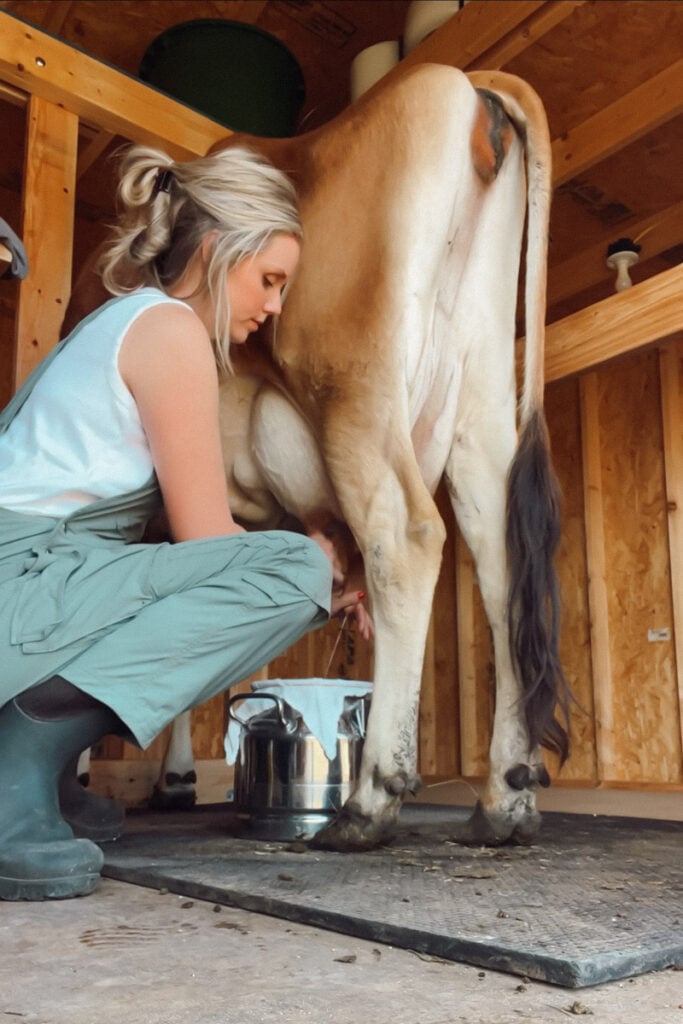
I’ve made cheese both ways—using milk from the grocery store and raw milk from our cows—and if you’ve ever followed a recipe exactly and thought, “Why doesn’t mine taste like that?”… your milk might be the reason.
Let’s break it down in a way that actually helps.
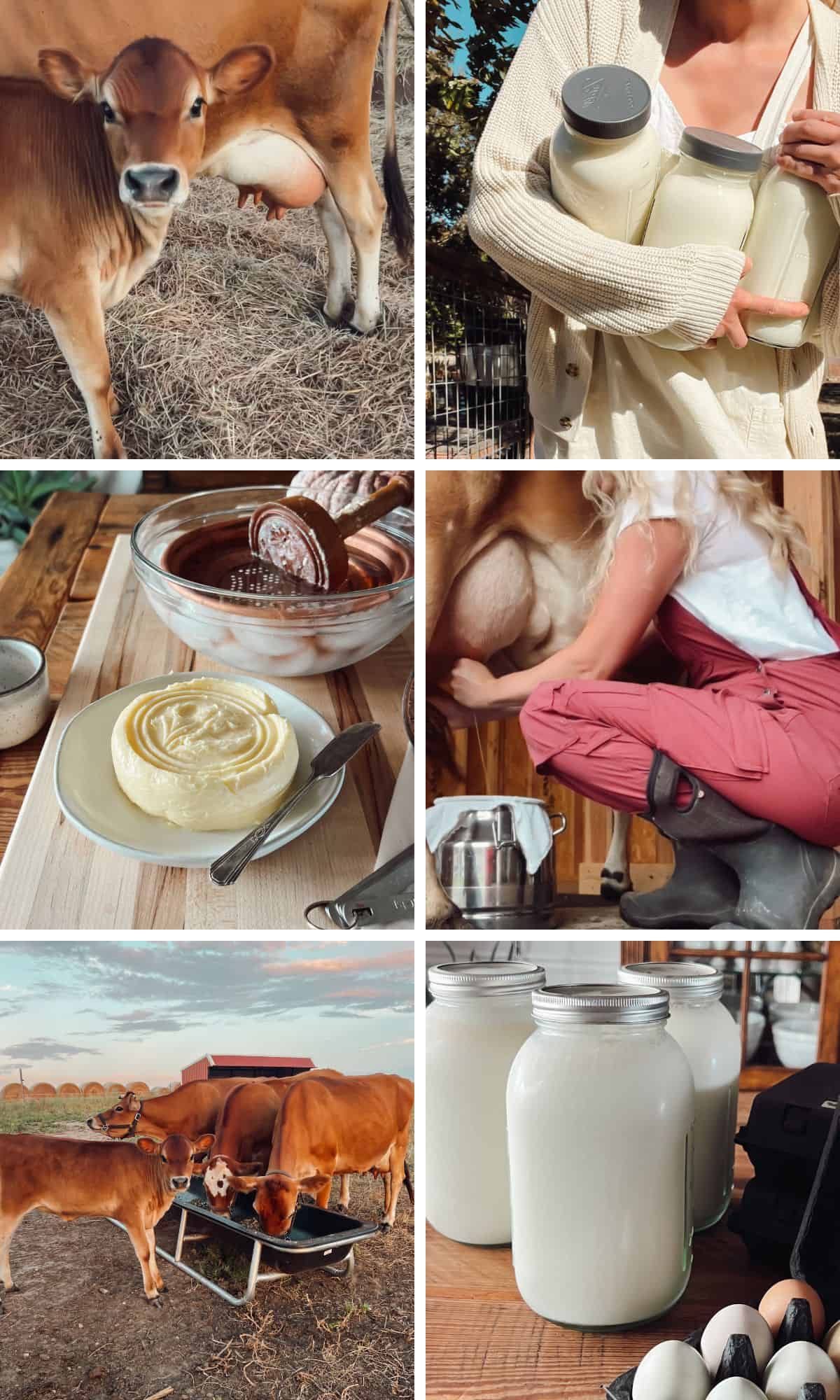
Raw milk vs pasteurized milk for cheesemaking: what actually changes?
Raw milk
- Not pasteurized, not homogenized
- Contains natural enzymes and bacteria
- Will naturally begin to ferment as it ages
- Flavor changes with season, feed, and the animal
Store-bought milk
- Pasteurized
- Homogenized
- Requires cultures to ferment
- Consistent from jug to jug
Is raw milk better for cheesemaking?
This is the question everyone is really asking.
👉 Raw milk can make more flavorful, complex cheese.
But it’s also less predictable and takes a little more awareness when you’re making it.
👉 Store-bought milk is more consistent and easier to learn on.
If I’m teaching someone brand new, I usually recommend starting with store milk so they can learn the process without as many variables.
It's also (usually) less expensive to buy a gallon of milk from the store than it is to pick up a gallon of raw milk from a farm. Spending $6 for a few gallons of store milk to try something new can feel more reassuring than dropping $20-30.
But if I have access to clean, high-quality raw milk? I’ll choose that every time for flavor. If you’re just getting started, I’d recommend starting with a simple cheese like my Homemade Cheddar Cheese recipe.
Good milk matters—but your setup matters too. Here’s the simple cheesemaking equipment I actually use at home.
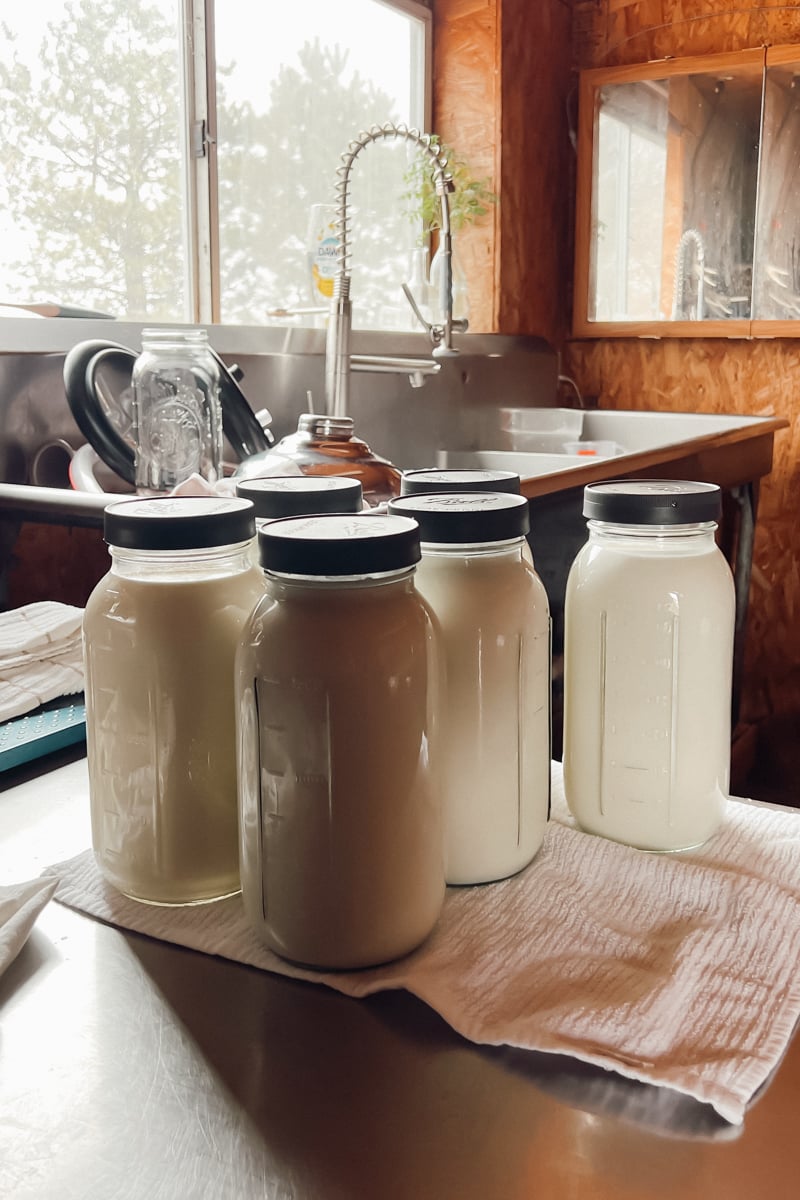
Flavor: this is where you’ll notice the biggest difference
Raw milk cheese:
- richer
- more complex
- slightly “alive” in flavor
Store-bought milk cheese:
- milder
- more predictable
When our cows are on fresh spring grass, the cheese tastes completely different than it does in the winter. You just don’t get that kind of variation from store milk.
Raw Milk Cultures More Easily
One reason traditional cheesemakers often preferred raw milk is because it naturally contains the living bacteria needed to culture and ferment milk. Before freeze-dried starter packets existed, farmhouse cheesemakers commonly relied on methods like clabber culture to inoculate fresh batches of cheese.
A healthy clabber culture acts as a natural mesophilic starter culture and can be used to make cheeses like cheddar, Gouda, Colby, and other farmhouse-style cheeses.
If you’d like to learn how I maintain and use a clabber culture in my own cheesemaking, you can read my full guide here: “How to Make a Clabber Culture.”
Texture and curd behavior
This becomes really noticeable in recipes like Gouda, where curd structure really matters. Same with Mozzarella, where the curds need to be able to stretch.
Raw milk:
- softer curd set
- more elastic
- can feel a little trickier at first
Store-bought milk:
- firmer curd
- easier to handle
- more consistent
I’ve had batches with store milk where everything behaved exactly like the recipe said it would. But I’ve also had milk that just never fermented correctly.
Unfortunately, even in a controlled system (like pasteurization and homogenization) there can be variables that throw your cheese recipe for a loop.
When using raw milk, you learn to pay attention instead of just following the steps. You learn how to notice the subtle details and adjust the recipe accordingly.
Yield (how much cheese you actually get)
👉 As a general rule, 1 gallon of milk (about 8.6 pounds) will give you roughly 0.8–1 pound of cheese.
But that number isn’t fixed—it depends on a few things, especially your milk.
Raw milk vs store-bought milk yield
Raw milk:
- often higher in butterfat (4–6%+ depending on the cow and season)
- typically gives closer to 1 pound of cheese per gallon
- sometimes a little more with very rich milk
Store-bought whole milk:
- standardized to about 3.25% milk fat
- usually yields closer to 0.7–0.9 pounds per gallon
Why the difference?
It mostly comes down to:
- fat content (butterfat)
- protein content
- how much “solids” are in the milk
More cream = more cheese.
Milk quality matters not just for cheese, but for everything you make from it—from butter to yogurt.
A real-life example
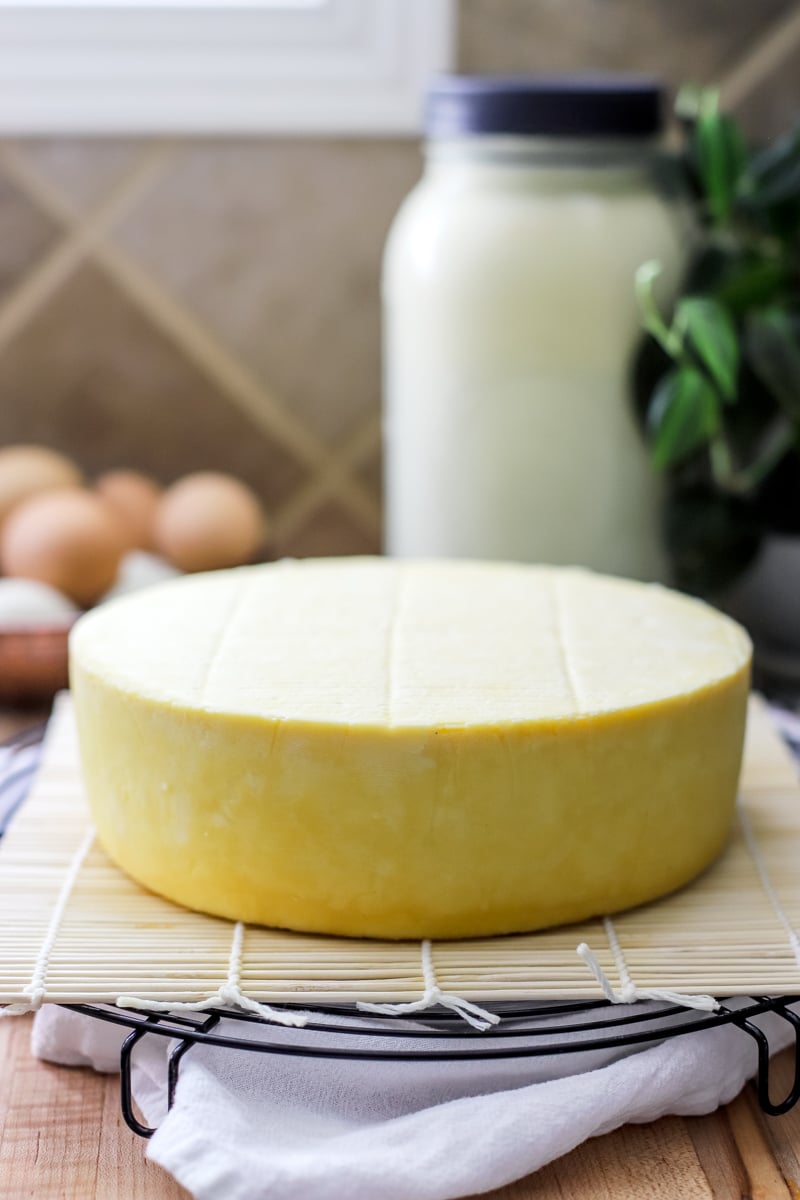
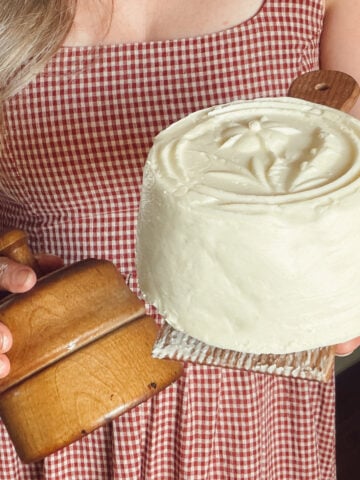
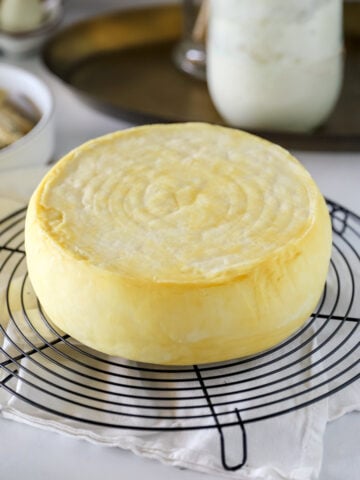
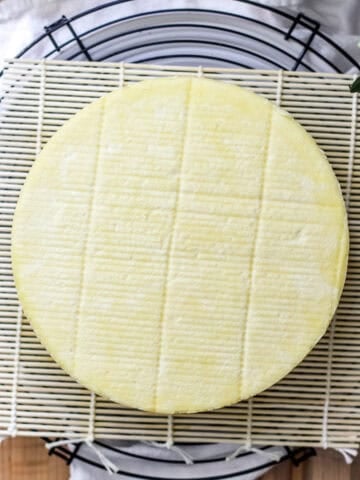
The cheddar cheese wheel pictured below was made with 2 gallons of fresh raw milk, which gave me right around a 2-pound wheel. This finished wheel of cheese (after pressing and drying) weighed 1 pound 15 ounces.
That’s pretty typical for the milk we get from our cows.
What to expect
If you’re using good quality store-bought milk, you’ll still get great results—the yield difference just might not be huge.
But fresh milk with a thick cream line?
👉 You’ll notice it.
Aging and flavor development
This is where raw milk really pulls ahead. There’s a reason so many traditional cheeses were made from raw milk. There’s just more happening during the aging process.
Raw milk:
- more natural enzymes
- more complex aging
- deeper flavor over time
Store-bought milk:
- relies more on added cultures
- still makes good cheese, just simpler
⚠️ A quick note on raw milk cheese and safety
This is one of those topics people feel strongly about, so here’s the straightforward version.
In the United States, the U.S. Food and Drug Administration allows certain cheeses to be made from raw (unpasteurized) milk—but with one key requirement:
👉 They must be aged for at least 60 days before being sold.
This guideline is based on the idea that over time, factors like acidity, salt, and moisture reduction help limit the growth of harmful bacteria.
That said, aging alone isn’t the only factor that determines safety.
Things that matter:
- milk quality
- animal health
- clean milking practices
- proper handling and aging conditions
If you’re using raw milk, sourcing it from a clean, responsible farm is everything.
If you don’t have access to that? Store-bought milk is a completely good and safe option.
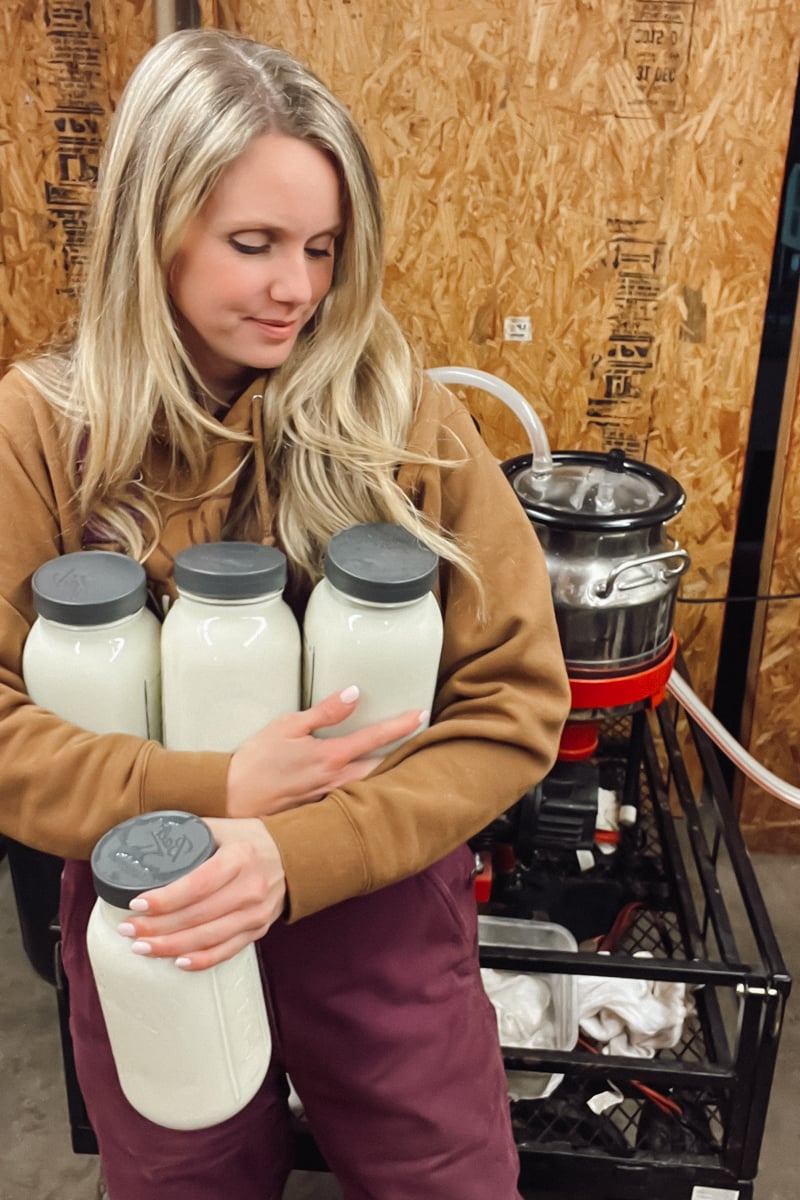
Which milk should you use?
Here’s the simple breakdown:
Use store-bought milk if:
- you’re just starting out
- you want predictable results
- you’re learning technique
Use raw milk if:
- you have a trusted source
- you want the best flavor possible
- you’re comfortable adjusting as you go
Best milk for cheesemaking (what I actually use)
I have used both—but for different reasons.
Before we had Rosie & Spice, I'd grab milk from the store to make cheese. And if my cows were both dry (not producing milk) at the same time, for some reason, I'd use store milk. If you either cannot find fresh milk or prefer avoiding raw milk, use pasteurized milk and start making cheese! I'm rooting for you!
But when I want something that actually tastes like real, traditional food— something that reflects the season, the animals, and the work behind it— so I exclusively use raw milk.
It’s a little more effort.
It’s a little less predictable.
But for me, it’s worth it.
Frequently Asked Questions
Yes—as long as it’s not ultra-pasteurized. Store-bought whole milk is often the easiest place to start and gives consistent results.
It can create more complex flavor because of the natural enzymes and bacteria, but it also requires more attention during the process.
Most beginners do best starting with store-bought whole milk. It removes some variables so you can focus on learning the process at a lower price point.
Final thoughts
You don’t need raw milk to make good cheese.
But it does change the final result.
If you have access to clean, high-quality raw milk and you’re willing to learn how it behaves, it’s one of the best ways to elevate your cheesemaking.
If not? You can still make really good cheese right in your kitchen.
About Me
More Cheesemaking Posts You'll Love
- How to Use Antique Butter Molds (And Where to Find Them)
- How to Make and Maintain a Clabber Culture
- How to Make Fresh Cheddar Cheese Curds
- Cheesemaking Equipment for Beginners (Simple Home Setup That Actually Works)
- How to Make Gouda Cheese at Home (Traditional Washed-Curd Recipe)
- Quick Cream Cheese Recipe
- Homemade Mozzarella Cheese Recipe (with Raw Milk or Store-Bought)
- How to Make Cheddar Cheese - Easy Recipe!

Comments
No Comments