
Lemon Sourdough Scones Recipe
Say goodbye to dry, tasteless scones. These flaky and buttery lemon sourdough scones are bright, tender, and finished with a simple lemon glaze that tastes like sunshine.
I’m going to show you my best sourdough scones recipe, but with plenty of fresh lemon flavor and a soft, bakery-style texture. These homemade lemon scones can be made with either sourdough discard or active starter, making them one of my favorite ways to use up extra starter.
Cold butter, fresh lemon zest, and a simple mixing method keep these sourdough scones soft, flaky, and full of bright citrus flavor.

Jump to:
- Why You'll Love It
- Why This Lemon Sourdough Scones Recipe Works
- What Do You Need to Make Lemon Sourdough Scones?
- Here’s Your Shopping List:
- How to Make Lemon Sourdough Scones
- Recipe
- How to make scones that are not dry
- My Best Tips for Perfect Sourdough Scones Every Time
- Long fermented scones
- Variations & Optional add-ins
- How to store scones
- Top tip
- What to serve with scones
- Frequently Asked Questions
- More breakfast foods you'll love!
- New sourdough recipes!
- Comments
Why You'll Love It
Bright lemon desserts are one of my favorite things to bake, especially when paired with a tender, buttery sourdough scone. These lemon sourdough scones are soft and flaky with bright citrus flavor in every bite thanks to plenty of fresh lemon zest and lemon juice.
One of my favorite things about making sourdough scones is how easy they are to customize once you have a solid base recipe. This sourdough scones recipe comes together with simple pantry ingredients, and you can easily change the flavors with different fruits, glazes, spices, or mix-ins depending on the season. I’ve shared several variation ideas later in this post if you want inspiration.
These homemade lemon scones feel special enough for a baby shower brunch, Easter breakfast, afternoon tea, or spring gathering, but they’re simple enough to make on an ordinary weekend morning too.
Why This Lemon Sourdough Scones Recipe Works
- Soft, flaky texture from cold butter
- Bright lemon flavor from fresh zest and juice
- Works with sourdough discard or active starter
- Easy to customize with seasonal mix-ins
- Simple pantry ingredients
- Perfect for brunches, showers, holidays, or weekend baking
What Do You Need to Make Lemon Sourdough Scones?
When I think of the best sourdough scones, I picture a sweet grandma in a floral apron pulling a tray of warm scones from a vintage oven. They’re simple, comforting, nostalgic, and made with basic pantry ingredients instead of anything complicated.
You only need 9 simple ingredients, a large mixing bowl, and your hands to make these lemon sourdough scones. No stand mixer or fancy baking equipment required.
I usually make scones using a pastry cutter or pastry blender, but you can also grate frozen butter with a cheese grater for extra flaky layers (yum!). The less you work the dough, the more tender your sourdough scones will be, which is why I often prefer using my hands and a wooden spoon instead of electric mixers.
If you want to make these a little less “vintage grandma” and a little more modern-day convenience, a food processor works beautifully too.
Here’s Your Shopping List:
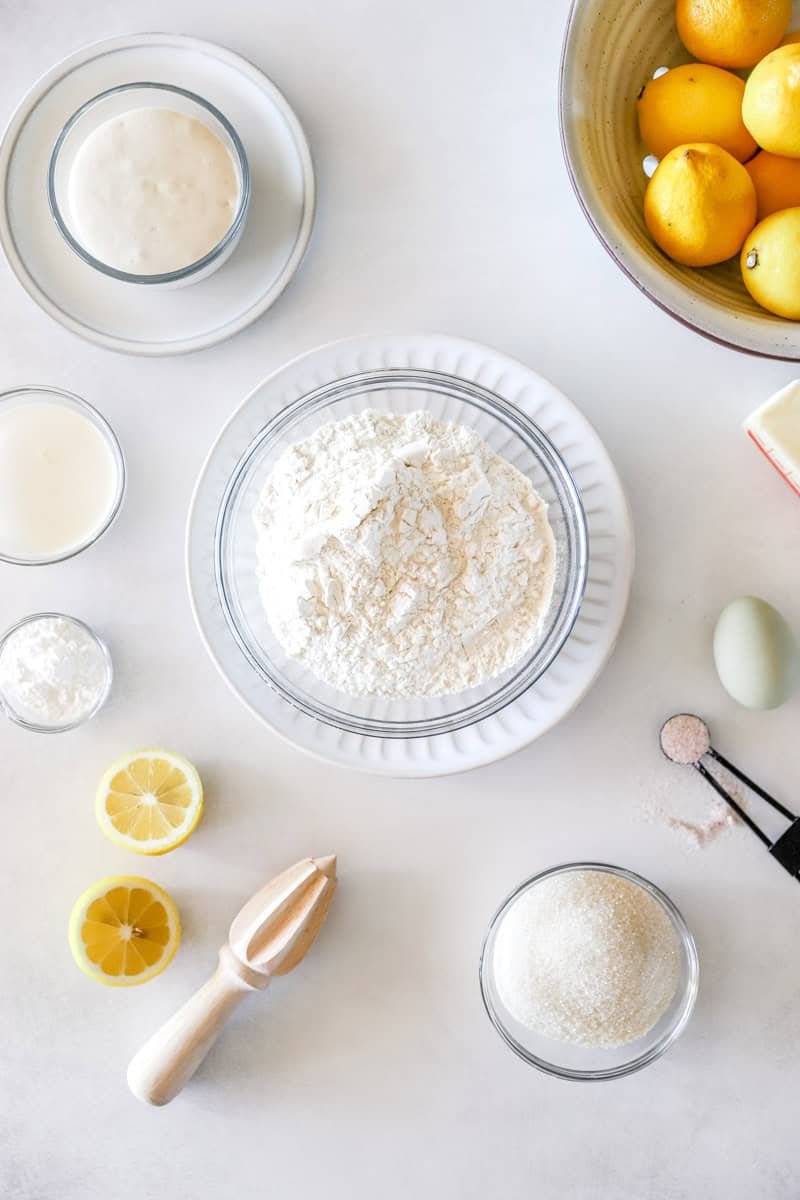
Lemons
Fresh lemons are the star of this recipe, so choose ones with glossy yellow peels and no soft spots or blemishes. We’ll use both the lemon juice and fresh lemon zest in the scones and the sweet lemon glaze, so fresh lemons make a huge difference in flavor.
Sourdough Starter
You can use either sourdough discard or active sourdough starter in this recipe. One of the reasons I love these lemon sourdough scones is how flexible they are, so don’t stress too much about whether your starter was recently fed. Read How to Make a Sourdough Starter if you don't have one yet.
Butter
Cold butter is the secret to tender, flaky sourdough scones. I like to cube mine and sometimes even freeze it for 10 minutes before mixing the dough. Those little pockets of cold butter create soft layers and that buttery bakery-style texture. Ready to make your own butter? Read How to Make Homemade Butter for step-by-step instructions!
Sugar
Fresh lemon adds a lot of bright tart flavor, so a little sugar helps balance everything and keeps the scones from tasting too sharp. Honey will not work as a substitute for this recipe, unfortunately.
Heavy Cream
Heavy cream helps bind the dough together while giving the scones a rich, soft texture. I usually keep an extra splash nearby while mixing in case the dough needs a little more moisture.
All-Purpose Flour
Regular all-purpose flour works beautifully here. I also love using Jovial All-Purpose Einkorn, The Food Nanny All-Purpose Kamut, or fresh-milled flour blended with all-purpose flour for a softer texture. If you are gluten-free, this recipe works with a gluten-free starter and both Bobs 1:1 or King Arthur Measure-for-Measure gluten-free flour blends (expect the dough to be a bit sticker and more dense).
Baking Powder
Make sure you’re using baking powder, not baking soda. Also check that it’s fresh. Old baking powder can lead to flat, dense scones that never rise properly.
Salt
Even sweet baked goods need a little salt to balance the flavors and bring out the lemon. You'll want a fine grind for this recipe, not coarse.
Milk or Cream for Brushing
Before baking, brush the tops of the scones with a little milk or cream for that beautiful golden color. I usually use a splash of cream mixed with a tiny bit of water. This tip was passed down by my Grandma, and she definitely knows best! I brush my homemade pie crusts with milk or cream, too.
See recipe card for quantities.
How to Make Lemon Sourdough Scones

- Preheat oven to 400℉ and line a baking sheet with parchment paper.
- In a large mixing bowl, sift together the flour, sugar, baking powder, and salt. In a separate bowl, chop the butter. Place both bowls in the freezer for ten minutes. Keeping the ingredients cold will help to produce a thick, fluffy and buttery scone.
- Use a pastry cutter to cut the butter into the dry ingredients until it resembles coarse sand. If the butter begins to feel warm, pop the mixture back into the fridge for ten minutes.

4. Add the heavy cream, sourdough discard, zest, lemon juice and vanilla to the bowl and stir with a fork until just mixed.
5. Turn the dough onto the parchment lined pan and shape it into a disc that is about 9 inches. This does’t need to be perfect, but a consistent thickness is key. I use my hands instead of a rolling pin to keep from smashing down the dough which would make my scones flat.
Cut with a sharp knife or bench scraper into wedges. Separate the wedges to 2” apart. This allows every nook and cranny along the edges to bake evenly!
6. Place a small amount of cream in a bowl and brush the tops of the lemon sourdough scones with the cream. Bake at 400℉ for about 20-25 minutes, depending on your oven. The scones should be just beginning to brown along the edges and a toothpick inserted into the center of a slice comes out clean.
7. Allow the scones to cool on a wire rack. While the scones are cooling, it’s time to make the glaze. In a small bowl, whisk together the milk, lemon juice, zest, powdered sugar, and vanilla until smooth. Drizzle over cooled scones.
8. Enjoy! Scones will keep at room temperature in an airtight container for up to 5 days and can be frozen for up to a month!

If you make this recipe, please leave a comment below! This provides helpful feedback to both me and other readers. For more delicious recipes from scratch and homesteading tips, follow me on instagram @NinnescahHomestead
Recipe

Lemon Sourdough Scones
Equipment
- parchment lined baking sheet
- bench scraper
- cheese grater or pastry cutter
- large mixing bowl
Ingredients
- 2 cups all purpose flour
- ½ cup granulated sugar
- 1 tablespoon baking powder
- ½ teaspoon salt
- ½ cup unsalted butter frozen for 30 minutes
- 3 tablespoons heavy whipping cream be prepared to add more for dry dough!
- 1 tablespoon lemon zest * or the zest of one lemon
- 1 tablespoon lemon juice
- ½ cup sourdough starter discard or active
- 1 egg
- 2 teaspoons vanilla extract
Optional lemon glaze
- 1 cup powdered sugar
- ¼ cup heavy cream
- 1 tablespoon lemon juice plus zest
- ¼ teaspoon vanilla extract
Instructions
- Preheat oven to 400℉ and line a baking sheet with parchment paper.
- In a large mixing bowl, sift together the flour, sugar, baking powder, and salt. Place the bowl of flour mixture in the freezer for ten minutes. Keeping the ingredients cold will help to produce a thick, fluffy and buttery scone.2 cups all purpose flour, ½ cup granulated sugar, 1 tablespoon baking powder, ½ teaspoon salt
- Use a pastry cutter or cheese grater to cut the butter into the dry ingredients until it resembles coarse sand. If the butter begins to feel warm, pop the mixture back into the fridge for ten minutes.½ cup unsalted butter
- Add the heavy cream, sourdough starter, egg, zest, lemon juice and vanilla to the bowl and stir with a fork until well mixed.3 tablespoons heavy whipping cream, 1 tablespoon lemon zest, 1 tablespoon lemon juice, ½ cup sourdough starter , 2 teaspoons vanilla extract, 1 egg
- Turn the dough onto the parchment lined pan and shape it into a disc that is about 9 inches. This does’t need to be perfect, but a consistent thickness is key. I use my hands instead of a rolling pin to keep from smashing down the dough which would make my scones flat. If the dough isn't holding together, add cream, ½ tablespoon at a time. Likewise, if it is too wet, add flour. Cut with a sharp knife or bench scraper into wedges. Separate the wedges to 2” apart.
- Place a small amount of cream in a bowl and brush the tops of the scones with the cream. Bake at 400℉ for about 20-25 minutes, depending on your oven. The scones should be just beginning to brown along the edges and a toothpick inserted into the center of a slice comes out clean.
- Slide the scones with the parchment onto a wire rack to cool. While the scones are cooling, it’s time to make the glaze. In a small bowl, whisk together the milk, powdered sugar, and vanilla until smooth. Drizzle over cooled scones.1 cup powdered sugar, ¼ cup heavy cream, 1 tablespoon lemon juice, ¼ teaspoon vanilla extract
- Enjoy! Scones will keep at room temperature in an airtight container for up to 5 days and can be frozen for up to a month!
Notes
Nutrition
How to make scones that are not dry
Dry, dense scones are one of the most common baking disappointments. The good news is that sourdough scones are actually very forgiving once you understand what the dough should feel like.
The biggest mistake people make is adding too much flour or overworking the dough. Tender sourdough scones come from cold butter, gentle mixing, and dough that still feels slightly soft before baking.
If your lemon sourdough scone dough feels dry or crumbly while shaping, add a little milk, heavy cream, or water one teaspoon at a time until the dough holds together. If the dough feels overly sticky or wet, lightly dust in a little extra flour.
Pay close attention to the texture of the dough instead of following the recipe mechanically. That’s usually the difference between dry, dense scones and soft, flaky ones.
My Best Tips for Perfect Sourdough Scones Every Time
- Use very cold butter. Cold butter creates flaky layers and keeps the scones tender instead of dense. You can grate frozen butter, pulse it in a food processor, or cube it and freeze it for 10 minutes before mixing.
- Heavy cream and sourdough starter work beautifully together. The combination gives these lemon sourdough scones a rich texture while still keeping them soft and light.
- Do not overwork the dough. Lumpy dough is completely fine. Smooth dough usually means the butter has been overmixed, which can lead to tough, dry scones.
- Do not overbake. Overbaked scones lose that soft, tender texture quickly. Bake just until the tops are lightly golden and the centers are set.
Long fermented scones
Long-fermenting scones is easy. You can mix up the scones, shape them into a disc, wrap it in plastic or put it in an airtight glass container and put it in the refrigerator for up to 3 days. The longer they are in the fridge, the more the sourdough starter will long ferment the dough. This will change the texture of your scones from flaky to cake-y, so be aware!
Variations & Optional add-ins
Cranberry Orange scones: For a cozy winter version, swap the lemon juice and zest for fresh orange juice and orange zest, then fold in dried cranberries. Mandarins, Cuties, navel oranges, or even grapefruit all work beautifully here. If you want the full version, try my Cranberry Orange Sourdough Scones recipe.
Sourdough blueberry scones: To make blueberry sourdough scones, prepare the recipe as written and gently fold in ½ cup fresh, frozen, or freeze-dried blueberries before shaping the dough. Freeze-dried blueberries also make a beautiful lavender-colored glaze if blended into a powder first. You can find my full Blueberry Sourdough Scones recipe here.
Chocolate chip sourdough scones: Instead of adding the lemon juice and zest, leave it out. Fold in ½-3/4 cup of chocolate chips with the wet ingredients and finish the recipe as written. Use melted chocolate chips or shaved chocolate instead of a glaze on top.

How to store scones
The best way to store scones is in an air tight container, preferable glass, on the countertop for 1-2 days. They are still edible for up to 5 days, but they won't taste as flaky or fresh. Make ahead and freeze in an airtight container or ziploc bag for up to a month.
Top tip
The best way to reheat leftover scones is by placing them in the microwave on a plate, covered with a barely damp paper towel. Microwave for 12-15 seconds.
What to serve with scones
If you are in charge of breakfast or brunch, I have plenty of trusty recipes to serve with scones! I like to make things ahead of time so that I'm not rushed, so here is my best hostess menu that won't have you stuck in the kitchen all morning.
- Venison Sausage Breakfast Casserole: This is a potato, egg, sausage and cheese recipe that can be mixed up the night before and popped in the oven the next morning.
- I like to make a few quick breads or muffins to go with my scones. My current obsession is Cranberry Cream Cheese Bread or Blueberry Cream Cheese Muffins. They are so good!
- We're gonna need a juice, too. I love making a spritzer by mixing cranberry juice with sprite or seven up. Here's my Homemade Cranberry Juice recipe if you want to make it from scratch!
- Asparagus Puff Pastry is a savory dish that looks ultra fancy, but is super easy to make! The only downside is that this is best served fresh out of the oven, so go ahead and have your bacon pre-cooked and everything prepped the night before to make it come together faster.
Frequently Asked Questions
Yes. This lemon sourdough scones recipe works well with either sourdough discard or active starter. Discard gives the scones a slightly deeper flavor, while active starter can create a little more lift and tenderness.
Dry scones are usually caused by too much flour, overworking the dough, or overbaking. The dough should still feel slightly soft before baking, and cold butter helps create a more tender texture.
Yes. You can freeze unbaked scones and bake them straight from frozen, or freeze fully baked scones and reheat them gently later.
Yes, but fresh milled flour absorbs more liquid than regular all-purpose flour. For the softest texture, I recommend starting with a blend of fresh milled flour and all-purpose flour.
Cold butter creates little pockets of steam as the scones bake, which gives sourdough scones their flaky texture and tender layers.
More breakfast foods you'll love!
Looking for other recipes like this sourdough scones? Try these:


New sourdough recipes!





Thank you so much for sharing all the great tips you have while making scones. I loved the frozen butter and how you shaped them.
These were very good. I received many compliments.
This recipe was really very easy to follow. They were very enjoyable!
So good! We make these every weekend 😄
I'm so happy to have found this recipe - my scones turned out perfect. I've been experimenting with making sourdough starter and used this recipe for my first attempt at baking with sourdough. I couldn't be more happy with the results!
Kelley! I'm so glad to hear you had a great experience with this recipe! I appreciate it so much that you took the time to leave a comment. When you feel ready to bake a sourdough sandwich bread, I highly recommend my pullman pan recipe!
Happy baking!
-Meg
Followed recipe but increased the ingredients to make 12 scones. They came out huge but look wonderful. I do have a note, with my gas stove, 400°f is too high even on the oven top rack. I put the timer for 20 mins, and when it had 10 mins left, I had to lower the temp to 390°f, since the bottom were getting golden already. Took the scones out 2 mins early since they were getting a bit too golden. Bottoms look a little darker than I would like, but I know to tweak the recipe for next time. Perhaps 375°f will be perfect for my oven.
Hi Laura,
This is very helpful information. Thank you for explaining it so well!
- Meg
Hi! Is there a difference in using AP v bread flour for scones?
Hi Rebecka- Great question! Bread flour has a higher protein content than all-purpose flour, which can result in a denser and chewier texture. Scones typically benefit from a tender, crumbly texture, which all-purpose flour provides better. Short answer, yes, you can substitute.
Happy baking!
- Meg
I made these and they were so good! I pressed them in a glass 9 in a pie dish. I made the cuts and even after cooking you could still see the cuts! This a keeper!! 🙂
Hi Joan! I'm so happy to hear that you loved these sourdough scones! I am going to have to try baking them in a large pie dish next time. That sounds like such an efficient and easy way to get fluffy scones. Thanks for sharing this tip!
-Meg
I used a 9 inch tart dish. I precut also and could still see the cuts after baking. I think it took them longer to bake this way. They were enjoyed by my favorite coworkers with a bit of lemon curd.
These turned out perfectly!
This recipe is amazing! I have made this several times. I do like a stronger lemon flavor so I double the lemon juice and zest without the dough being too moist. I have also taken this recipe and used orange instead of lemon and added dried cranberries, again a very good recipe. This morning I made a lemon raspberry and added frozen raspberries and additional 1/2 cup of flour. Again, very delicious!! Thank you for sharing such a good recipe!!
Great recipe! I made few changes: cut sugar by 2 Tablespsoons - used half and half instead of heavy cream. Also made 8 wedges, for fewer calories per scone.
Very easy following your tips,
I don’t have heavy whipping cream. What could I use instead?
Hi Lisa! For scones, you can substitute cream with a mixture of milk and butter, or use yogurt, buttermilk, or even evaporated milk. Half-and-half can also be used, often with the addition of a bit of butter.
These are my go to! Love all the variations and they are the least dry, most delicious scones I’ve ever eaten! I make hundreds each summer for the farmers market and sell out every time!
With the glaze having heavy cream in it, will they still be able to be kept on the counter? I’m never sure with glazes they have milk or cream.
Do you have the metric conversion for the measurements in grams?