
How to Start a Homestead (Without Burning Yourself Out)
Learn how to start a homestead the realistic way—simple steps, beginner-friendly ideas, and practical tips from a fifth-generation homesteader.
If you’re looking for a realistic, beginner-friendly way to start homesteading, this guide will walk you through exactly what to do (and what to avoid). Most people don’t fail at homesteading because they’re not capable—they fail because they try to do too much, too fast—especially when they’re first learning how to start a homestead.
I see it all the time: chickens, a huge garden, canning, maybe even dairy animals. All at once. And within a year? Burnout, followed by a post on instagram titled, "Why I Quit Homesteading," and then a smiling picture posed in front of the new home (in town) they're moving to. Because that's not how a homestead is built.
I've spent years slowly building ours here in Kansas: milk cows, a big garden, preserving food, all of it. And if I had to start over tomorrow, I would do it very differently.
So if you're dreaming about starting a homestead, let me show you a realistic way to begin -- one that actually lasts. And if you want a simple, step-by-step plan to map it out, I put together a beginner-friendly guide list you can grab here 👉 How to Start Homesteading
What is Homesteading? (A Simple Explanation for Beginners)
Homesteading is the practice of becoming more self-sufficient by growing food, raising animals, and cooking from scratch— at whatever scale fits your life.
Homesteading isn't about doing everything. It's about doing a few things well.
At its core, homesteading means becoming more self-sufficient in ways that fit your life:
- Growing some of your own food in a garden
- Cooking more from scratch recipes
- Raising animals like dairy cows, chickens or pigs (if you want to)
- Preserving food so it lasts
For some people, that's a full farm. For others, a few raised beds and a handful of chickens. Both count.
How to Start a Homestead: The First Question You Should Ask
Before you plant a single seed, ask yourself: What do I actually want from this?
- More control over my food?
- Saving money?
- A slower lifestyle?
- Getting in touch with nature?
Because your answer changes everything.
- 👉 If your goal is fresh food → start with a garden
- 👉 If your goal is convenience → start cooking from scratch
- 👉 If your goal is sustainability → start sourcing local food
If you need help turning those ideas into a clear, doable plan, that's exactly what I created my garden planning guide for 👉 Grab your FREE garden guide!
How We Started Our Homestead (And What I'd Do Differently)
When we started, we didn't have the full setup you see now.
We had:
- 4 chickens
- A small garden
- Two little kids (18 months and 2 years old)
- Full-time jobs
- A new-to-us home in the country + a small acreage
And it was enough! Moving out of town had always been our goal (we both grew up in the country), but finding a place had proven to be very difficult. We spent our years in town growing our first garden (spoiler alert- tomatoes don't grow well in a shady backyard!), Aaron was processing deer in our garage (we definitely looked like hillbillies) and I was learning how to use a pressure canner on the weekends.
In the beginning, feeding chickens, collecting eggs, and keeping a small garden alive already felt like a lot in that season of life.
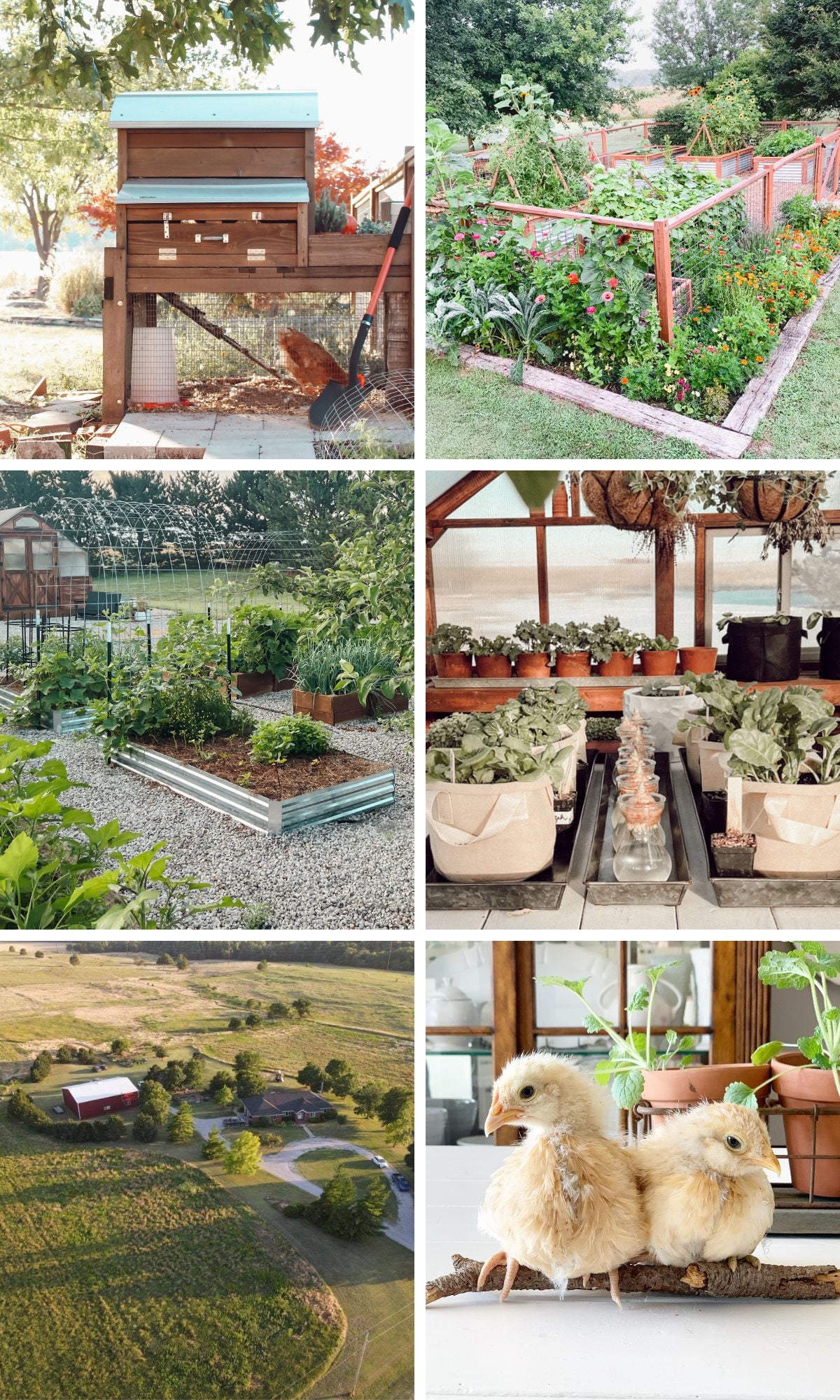
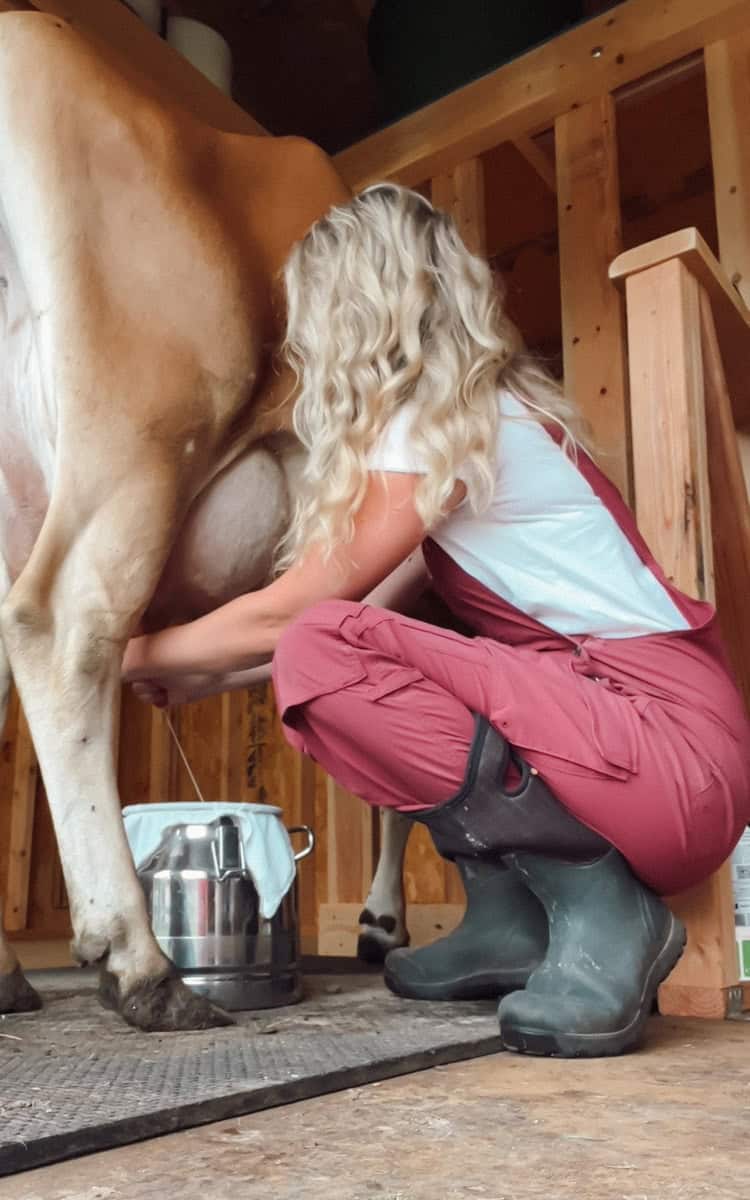
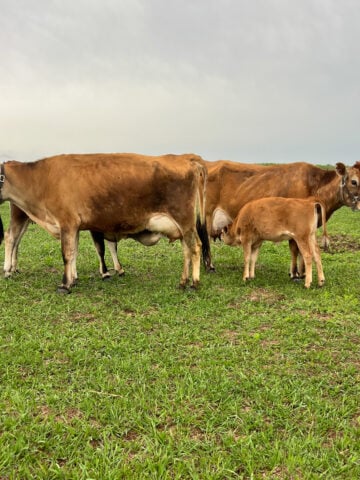
After years of building our homestead from just a few chickens and a small garden, we now milk two dairy cows, raise kune kune pigs for meat, raise meat chickens, and keep a flock of laying hens and a large garden.
Homesteading has to fit your life, not the other way around. And scaling too big too fast is the most common mistakes I see beginner homesteaders make. Speaking of, let's talk about mistakes next so that you can avoid them!
The Biggest Mistake Beginner Homesteaders Make
Trying to build their dream homestead in year one. Just because you can grow a huge garden... doesn't mean you should.
Because what happens next? You have too much to harvest... and suddenly you're trying to figure out how to preserve all of it.
If you've never canned before, start simple - something like water bath canned Zesty Dill Pickles or Homemade Peach Preserves. If you want to try pressure canning something easy, I have a beginner-friendly tutorial for How to Can Sweet Corn. These three recipes are all perfect for learning and developing skills!
Overwhelm is the fastest way to quit.
And the other big piece of advice I always give new homesteaders about how to start a homestead is to make room for change. Maybe now your kids are little (or you don't have children yet), but eventually they'll be older and your life will be even busier.
When our oldest sons started high school and middle school, our amount of free time plummeted. Making time to milk cows became a very difficult obstacle to work around when we had ballgames out of town. Or maybe the flexibility you have with your work or travel schedule will change.
All of these things will impact your homestead.
How to Start a Homestead With No Experience
If you're starting from absolute scratch, you are not behind. In fact, most people begin without any knowledge of gardening, preserving or caring for livestock.
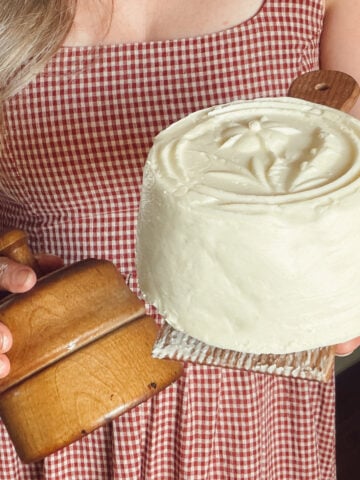
You don't need experience to start a homestead. You just need to start small and be willing to learn as you go. And how cool that we live in the era of YouTube! We are so fortunate to have videos and tutorials right at our fingertips. My video for How to Make Colby Cheese has helped hundreds of beginners make their first wheel, no prior experience needed!
Begin with one small skill:
- Grow something easy.
- Cook one meal from scratch each week.
- Learn a basic preservation method.
That's it! Most experienced homesteaders didn't grow up doing this - they learned step-by-step over time. If you're not sure where to begin, starting seeds indoors is one of the most affordable ways to get started 👉 Seed Starting 101.
How to Start Homesteading Step-by-Step (My Simple Plan)
If you’re wondering exactly how to start a homestead step-by-step, this is the simple plan I recommend after years of trial and error.
Year 1
- Small garden (raised beds or containers)
- Learn ONE preservation method
- Cook 2-3 meals from scratch each week
- Learn how your land/yard moves through the seasons
If you are brand new, this guide will walk you through my favorite (inexpensive and easy!) method for preserving food 👉 How to Use a Food Dehydrator.
Year 2
- Expand the garden slightly
- Add chickens (4-6 hens)
- Learn a second preservation method
A simple place to start is learning how to turn your harvest into meals your family will actually eat—like this easy, cozy soup 👉 Creamy Meatball Soup
Year 3
- Increase food production
- Improve systems and invest in efficiency (irrigation, fencing, composting, trellises)
Think slow, steady and sustainable. And remember to think of the future, too. If you are planning on retiring and slowing down, adding babies or sending children off to college, be realistic about how much time you have for homesteading. It's amazing how much free time is swallowed up by activities as the kids get older (in a good way, of course)!
Simple First Steps to Start Homesteading Today
Don't do all of these, just pick one or two.
- Grow herbs or lettuce in containers
- Start seeds indoors
- Try canning something simple
- Grow microgreens on your counter
- Cook one meal from scratch each week
This is how it starts. One skill you're eager to learn, a food you're excited to grow, and a preservation skill to master. Build a strong foundation and keeping adding as your capacity grows!
How to Balance Homesteading With a Busy Life
I'm going to say it out loud: You will not do everything at once (no one does!). You will not do everything at once, and you shouldn't. Homesteading isn't a straight path. It's more of a meandering trail with lots of interesting twists and turns.
When our kids were little and I was still working outside of the home, most of my homesteading looked like:
- Gardening while the boys splashed in the stock tank pool
- Growing microgreens in the kitchen window
- Buying and preserving discounted food from the store, such as homemade fruit leather or dried cranberries
- Caring for our small flock of backyard chickens
The Reality of Homesteading (What No One Tells Beginners)
There will be seasons where:
- Your garden struggles or even fails
- You're too busy to keep up
- Something just doesn't make sense anymore
We originally had a traditional in-ground style garden. The rototiller would work the soil each spring, and our crops were planted in neat rows.
Two things happened almost simultaneously:
- I read the book Kiss the Ground by Josh Tickell and began learning about regenerative farming
- I injured my cervical spine and could no longer bend over to plant and harvest without developing a terrible headache and numbness in my arms and hands.
Growing a raised garden made the most sense, and my gardening style changed drastically. Instead of disrupting the soil with a heavy tiller, I began building soil using the Hugelkultur method in raised beds. Less stooping over, plus healthier soil!
Homesteading is a constant adjustment.
What You Really Need to Start a Homestead
I bet you thought I was going to say land, didn't you?
Sure, a few acres (or more!) would be nice, but almost nobody starts out like that.
And it's not animals or a huge investment, either.
You need:
- A clear goal
- Dedicated time
- Willingness to learn (and fail)
How to Start a Homestead With Little Money
You don't need a large budget to start a homestead. Many beginners start with a small garden, basic seeds, and simple tools, slowly adding more over time. Starting small not only saves money but also helps you build skills before making bigger investments.
How Much Does it Cost to Start a Homestead?
This is one of the most common questions I get, and the honest answer is it depends on how you start.
You can spend thousands of dollars trying to build your "dream homestead" right away... or you can start for less than $100.
When we first started, we didn't go all in. We had a small garden, a few chickens, and learned as we went. Looking back, that's exactly what allowed us to grow our homestead without burning out (or overspending).
A Realistic Beginner Budget
- Low-Cost Start ($0-$100)
- Seeds: $10-30
- Containers or small garden setup: free-$50
- Basic kitchen supplies for cooking from scratch
- Moderate Start ($100-$500)
- Raised beds or garden materials
- Soil and compost
- Seed starting supplies (trays, lights, etc.)
- Larger Investment ($500+)
- Chicken coop and fencing
- Expanded garden space
- Food preservation equipment (canner, dehydrator, freezer)
My advice (from experience) is to start with what you can afford now. Don't go in debt trying to build a full homestead overnight. It's tempting, but also one of the fastest ways to get overwhelmed and quit.
Frequently Asked Questions About Homesteading
The easiest way to start is to begin with one small step—like growing herbs, starting a small garden, or learning a basic preservation method.
Starting small helps you build confidence and avoid burnout.
You don’t need much land at all.
Many homesteaders start in a backyard or even on a patio using containers or raised beds. It’s more about how you use your space than how much you have.
Start by identifying your goal.
Then choose one project—like gardening or cooking from scratch—and focus on that before adding anything else.
It doesn’t have to be.
You can start very affordably with seeds, basic tools, and simple skills. Larger investments can come later as you grow.
Yes.
Focus on small, manageable habits like tending a garden, cooking at home, or preserving food on weekends. It builds over time.
Start with:
Lettuce
Herbs
Tomatoes
Green beans
Zucchini
Most homesteads are built over several years.
Trying to rush the process usually leads to burnout. Slow growth is what makes it sustainable.
Final thoughts on Starting a Homestead
If you take nothing else from this, take this: start smaller than you think you should.
That's how you avoid burnout, that's how you stay consistent, that's how you actually build something that lasts.
And before you know it, you'll look around and realize... You've built a homestead!
More Homesteading Posts You'll Love

Comments
No Comments