
How to Make Money Homesteading: Turning Your Homestead Into an Income-Producing Business
Many people wonder if it's actually possible to make money homesteading or turn a small farm into an income-producing homestead.
The good news is that it absolutely is possible... but it usually doesn't happen how you'd expect.
For many people, homesteading starts as a lifestyle. You plant a garden. Maybe get a few chickens. Eventually you learn how to preserve food, bake bread from scratch, or make cheese in your kitchen.
Before long friends start asking questions.
- How do you grow tomatoes like that?
- What do you do with all those eggs?
- How do you make cheddar cheese at home?
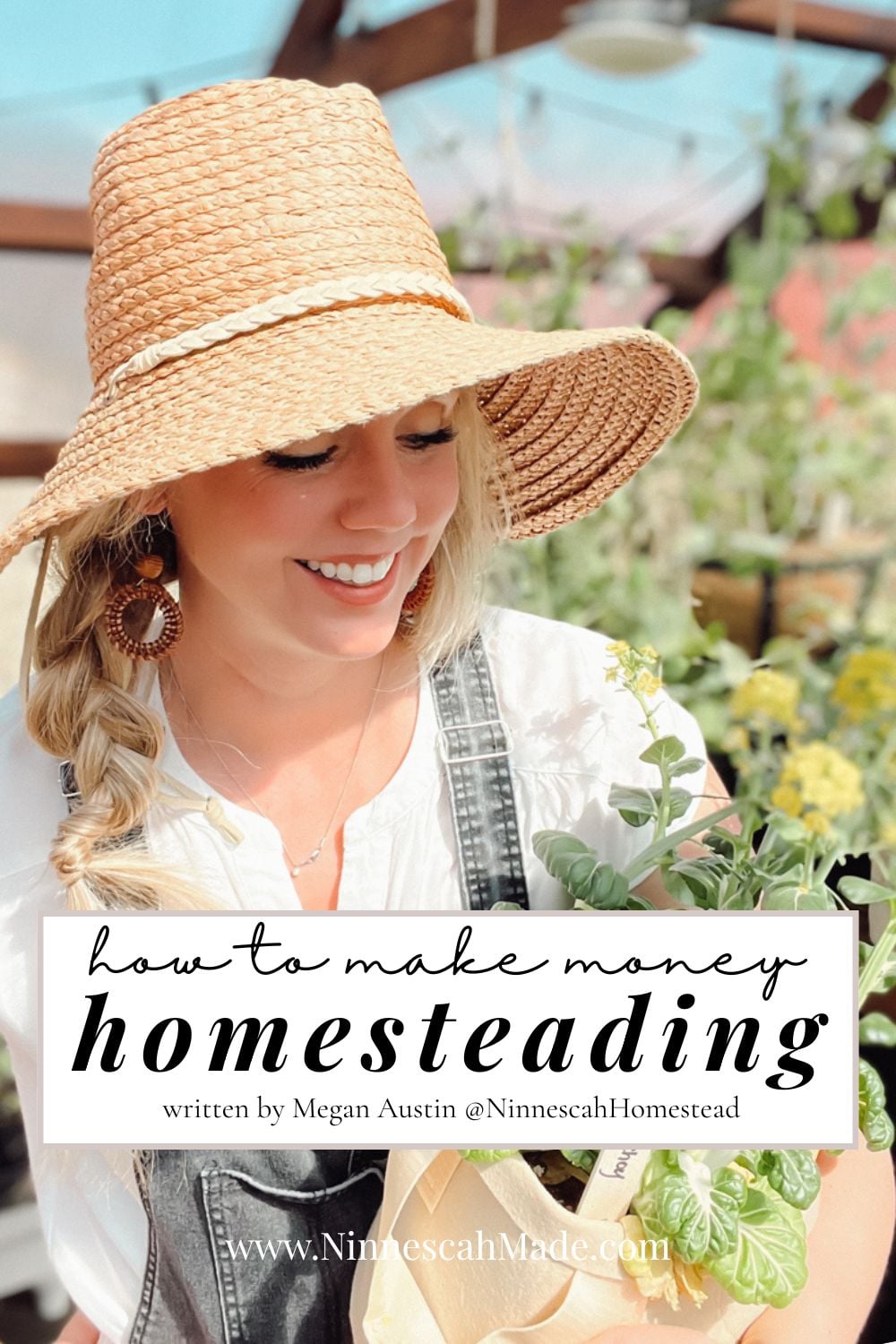
My Journey
That's exactly how my own journey started. Over the years my blog has grown to reach hundreds of thousands of readers, and my social media accounts now help millions of people learn homesteading skills every day. But it wasn't always like that.
Back in 2017 I opened an instagram account simply to share everyday life on our Kansas homestead. We were five years into homesteading, and at the time I had no intention of turning it into a business. I was still working as a dental hygienist, and making money online wasn't on my radar. I didn't even know real people could do that!
At the time I just loved documenting the things we were already doing: gardening, preserving food, raising chickens, and cooking from scratch. By this point sourdough had entered the chat and my garden was rapidly expanding each season!
Then 2020 happened.
Suddenly millions of people were interested in learning the skills that homesteaders had been practicing for years.
- Gardens were popping up everywhere (hello, supply chain problems & food shortages)
- People were buying backyard chickens (even in town!)
- Everyone was learning to bake sourdough
Questions began pouring in, so I dusted off a blog I had started in 2018 and began publishing recipes, tutorials, and homesteading guides.
Over a short amount of time my homesteading hobby grew into something much bigger.
Today our 20-acre homestead in Kansas operates as an income-producing homestead, generating income through blogging, social media, and traditional homestead activities like raising livestock.
If you're wondering whether it's actually possible to make money homesteading, the short answer is yes. But before we talk about homestead business ideas and strategies, let me show you how this unfolded on our own farm.
How I Built an Income-Producing Homestead Online
My path to online homestead income happened gradually. In 2017 I started sharing homestead life on instagram.
At first it was simply photos of:
- starting seeds
- fresh bread
- what we were cooking for dinner
- raising baby chicks
- everyday farm life
It was supposed to be a secret from my family and friends (ha!), but soon it was found and I suddenly had around 500 followers.
People weren't just enjoying the photos, they were asking questions and looking for guidance. So in 2018 I created this blog to publish recipes and homesteading guides. When the homesteading movement surged in 2020, that content suddenly reached a much wider audience.
- Instagram grew FAST.
- The blog traffic increased and I was able to become monetized with an ad agency called Mediavine.
- Facebook followed along at a slower pace, but recently leap-frogged the others.
Over time I began treating content creation as a real business rather than just a hobby.
Today I spend several hours each day:
- writing blog posts and updating old blog posts
- photographing recipes
- filming tutorials
- answering reader questions
Much of that content becomes evergreen, meaning it continues helping readers - and generating income - for years after it's published.

Can You Actually Make Money Homesteading?
There's a romantic idea online that homesteading automatically turns into a profitable business. In reality, most homesteads become profitable through multiple income streams, not just one.
Some homesteaders sell food products or livestock. Others teach classes or workshops. Many modern homesteads combine traditional farming with online income streams like blogging and social media.
Think of it less like a single job and more like a collection of small businesses that work together.
A successful homestead might generate income through:
- livestock sales
- farm products like eggs, flowers, vegetables, pumpkins
- letting photographers rent your space
- teaching classes or workshops
- blogging or social media content
- digital products or online courses
- consulting or freelance work
The most sustainable homestead businesses combine hands-on farm income with digital income streams that can scale over time. For example, I started out selling kombucha, eggs, sourdough bread, teaching in-person gardening classes and working as a freelance food photographer for bloggers.

Three Main Ways Homesteaders Make Money
While every homestead is different, most income falls into three broad categories.
Selling Physical Products
This is the most traditional way homesteaders make money. This road can be long and the profit margins (and losses) vary wildly.
Examples include:
- eggs from backyard chickens
- vegetables from market gardens
- baked goods
- honey from beekeeping
- handmade soaps or candles
- breeding livestock
- meat or dairy products
Before selling handmade or backyard products, research your local laws and regulations (sometimes called 'cottage food laws') to stay compliant.
On our own farm, for example, we raise dairy cows. Each year our cows give birth (which begins their lactations cycle for milking), and the calves can be sold after weaning. We also sell piglets and spring chicks.
Seasonal livestock sales can become a reliable source of income for small farms.
Some examples include:
- incubating chicks in the spring and selling them locally (such as Facebook groups)
- breeding pigs and selling piglets in spring and fall
- selling dairy calves after weaning
- selling breeding stock from well-managed herds
- renting pasture for other people's livestock
Teaching Homestead Skills
Many homesteaders eventually discover that their knowledge is valuable. Once you've learned skills like cheesemaking, gardening, food preservation, or animal husbandry, there are people eager to learn from you.
Teaching opportunities might include:
- in-person workshops
- farm tours
- online courses
- consulting for new homesteaders
- speaking events
Education is a powerful income stream because it allows you to share skills without relying solely on physical farm production.
I taught in-person classes from 2020-2024. The subjects I covered included kombucha (and everyone left with a SCOBY!), baking sourdough, seed starting, garden planning and how to grow on social media. Being an introvert, teaching classes really drained me. I loved creating the printable worksheets and preparing the hands-on portion of the class, but I stopped teaching and saying yes to speaking opportunities as soon as I was able generate income elsewhere.
How Homestead Creators Actually Make Money Creating Online Content
Fellow homebodies, this one is for us! Creating online is where modern homesteading businesses have really expanded in recent years.
Many homesteaders (and homemakers) now share their skills online through blogs, social media, YouTube channels, and digital sources.
Content creation allows you to teach thousands - or even millions - of people at once.
Online homestead businesses often earn money in the following ways:
- blog advertising (ad networks like Mediavine or Raptive)
- brand partnerships
- affiliate marketing
- social media monetization
- digital products

Blogging
Blog advertising is when you earn money through ads placed on your website. When you visit a blog and see ads along the sidebar or in between sections of the article, those ads are part of an ad network. The network pays the website owner based on the number of visitors viewing those ads.
That means helpful blog posts, like recipes, gardening tutorials, or cheesemaking guides, can continue to generate income long after they're published. As more readers visit your site, ad revenue grows along with your traffic.
Affiliate Marketing
Many companies partner with homestead creators to share products with their audience.
This might include things like garden tools, kitchen equipment, livestock supplies, or homestead-related products. A brand partnership involves a piece of content - such as a recipe, tutorial, or social media post - that features the product. If your social media presence is small, creating UGC (user generated content) could be a great option for you!
The most successful partnerships happen when creators work with brands they use and trust. That keeps recommendations genuine and helpful for the audience.
Affiliate marketing is when you recommend a product and earn a small commission if someone purchases through your link.
For example, if I share the grain mill I use for baking or my cheese press, I can include a special affiliate link. If a reader clicks that link and makes a purchase, I receive a small percentage of the sale.
Like ad revenue on blogs, this doesn't cost the reader anything extra, but it allows creators to earn income from recommending products they use and love.
A few of my favorites are Amazon Storefront, Scratch & Peck Feeds, Nutrimill, Roo Garden, Vego Garden, Eaton Pet & Pasture, Farmhouse Teas, and For Jars USA.
Social Media Monetization
Many social media platforms now offer programs that allow creators to earn money from their content. These programs may be based on things like video views, engagement, or advertising shown alongside the content.
For example, Instagram used to have a really nice bonus program, but now it only pays top tier creators a few dollars each month. YouTube is more generous, but it can require a bit more effort up front to qualify. But Facebook monetization is incredibly generous (at least at the time of writing this blog)! I am currently making more money from Facebook than any of my other income streams, so don't sleep on reels!
Meta (which owns Facebook and Instagram) doesn't allow creators to share screenshots or exact revenue, but I'll give you an example. This reel on facebook reached 22 million people and earned me enough money to buy a hundred more $50 butter molds. The same reel on Instagram reached 28.9 million and didn't I didn't make a penny.
Digital products, like e-books and online courses, are resources you create once and sell online over and over. Because digital products are delivered electronically, there’s no inventory or shipping involved. Once the product is created, it can be sold repeatedly to new customers. I have created and given away several free e-books (here's an example), and plan to add digital books to my online offerings within the next year.
These might include:
- recipe e-books
- gardening guides
- homestead planners
- cheesemaking classes
- sourdough tutorials
- online courses
Step-by-Step How to Build a Homestead Business Online
If you're interested in doing something similar, here's what helped me. You might notice my strategy has loosened up now that growth no longer is my primary focus, but if I had to create an online community from scratch today, this is exactly how I'd do it.
Step 1: Choose a Clear Niche
One of the biggest mistakes new creators make is trying to share everything all at once. It can be confusing because larger creators can get away with sharing on a wide variety of topics, but when you're starting out and trying to teach the algorithm who you are and what you offer, this is the best way. Successful homestead accounts grow by focusing on one clear niche, such as:
- gardening
- sourdough baking
- cheesemaking
- backyard chickens
- preserving food
- homestead cooking
- survival/prepping
- memes with a specific message
Niche down even further, if possible. Using gardening as an example, tighten it up into a particular growing zone, garden type or method. I grew by hashtagging all of my garden posts with #homestead, #homesteadlife, #zone6garden, #raisedbedgarden, and #garden. Back when I was doing this, hashtags were a solid strategy and my posts were always featured at the top of these key word pages. While hashtags are no longer as relevant, key words and niches certainly are!
This helps your audience to immediately understand: "This person teaches me how to _____." Clarity helps people find you, plus helps the algorithm know who to serve your content to.
Step 2: Use Social Media Strategically
Social media is how most people discover new homestead creators, and consistency matters far more than perfection. Ask any large account and they will tell you that the reel they spent the least amount of time on and thought would absolutely bomb always ends up reaching the most new people. Here's an example of a reel I almost didn't post (but thankfully did!) and gained over 15,000 followers!
When I was actively growing my audience, I focused on posting regularly (one reel every day) and staying within my niche. Now the algorithm is preferring 2-3 posts per day, at least at the time of writing this.
That might look like:
- posting 1-3 daily reels consistently
- Posting a daily carousel on Instagram (Facebook doesn't prioritize these, though)
- sharing helpful tutorials
- answering common questions
- showing real life on the farm
The most successful content tends to be:
- educational
- relatable
- visually appealing
- easy to understand
Good lighting, clear visuals, and simple editing make a huge difference in how your content performs. If you aren't familiar with hooks and call to actions, make a note to research these before creating your first reel.
Step 3: Build Trust with Your Audience
People don't follow homestead accounts just for information. They follow people they trust. These glimpses of everyday life help build connection and authenticity. Share the real rhythm of your homestead life:
- morning chores
- animals in the pasture
- cooking in your kitchen
- tending to or harvesting from the garden
- lifting jars out of a canner
Step 4: Create Evergreen Content
One of the most powerful parts of influencing is evergreen content. Instead of creating content that disappears in a social media feed, you're building a long-term library of helpful resources. Short evergreen video clips can be repurposed over and over. Evergreen content includes things like:
- recipes
- tutorials
- step-by-step guides
- beginner homestead advice
- aesthetic B-roll video with text overlay
Skills That Help Homestead Creators Succeed
- storytelling - find your core message and keep telling it, over and over again
- photography - I have taken online and in-person classes and HIGHLY recommend it. My favorite online course was Foodtography School, and unfortunately it's no longer available.
- recipe development
- gardening expertise
- SEO (search engine optimization) - podcasts like this one and The Blogging Millionaire Podcast are incredibly helpful for beginners
- video editing - Kimberly Espinel has great tutorials on instagram
- mentorships & community - I would not be where I am without my friends. We all bring different skills to the table and mastermind with each other monthly through texts, phone calls, direct messages, and zoom/google meetings. Find your friends and help each other!
How Long it Takes to Make Money Homesteading
One of the biggest misconceptions about making money online is that it happens quickly. In reality, building a successful homestead business often takes several years of consistent effort. Many homesteads either don't know how to achieve success, or don't have the work ethic and drive it takes to make it happen.
It can feel slow at first. But over time your library of content grows, your skills improve, and many of those posts begin working for you long after they were created. That's when passive income really starts to build. I didn't make any money online until 2022 (several years after creating my social media accounts and website).
If you've ever heard someone say 'fake it till you make it,' this is a prime example! Treat your business like a business long before the income starts. Consistency, learning skills, practicing and trial and error. The only way to lose is by giving up.
The Long-Term Power of Passive Income
The biggest advantage of blogging and creating online content is the potential for passive income. Instead of trading time for money every day, you're building a collection of resources that continue helping people over time.
A recipe published today might still be bringing readers to your site five years from now. Tutorials like my homemade cheddar cheese guide or recipes like my sourdough sandwich bread (pictured below) keep bringing new eyes to my site day after day. My first blog post to ever go evergreen was my Sourdough Coffee Cake. While the first wave of viral views have slowed down since it was posted in 2021, it's still faithfully generating ad revenue.
That's the power of evergreen content!

Common Ways Homesteaders Make Money
- livestock breeding
- selling eggs and produce
- farm products like honey or flowers
- blogging and content creation
- teaching homestead skills
- digital products
- consulting or freelance work
Frequently Asked Questions
Yes, but most successful homesteads rely on multiple income streams such as livestock sales, blogging, teaching skills, and digital products.
Profitable homestead products vary by region, but common examples include eggs, digital products, chicks, piglets, cattle, honey, vegetables, and dairy products.
Blogging can become one of the most scalable income streams because helpful tutorials and recipes can generate traffic for years. Blogging can be challenging, but the potential income is massive.
No! The landscape has changed rapidly with the development of AI, but blogging is still a sustainable source of income. Stay up to date with the best practices, create helpful user-first content, and post consistently.
Final Thoughts
If you're dreaming of turning your homestead into a business, start small.
- Choose a niche & make a plan
- Share consistently
- Focus on helping people
The internet doesn't need more influencers. It needs people willing to share real skills that help others live more self-sufficient lives. If you're doing that, you're already moving in the right direction.
Are you trying to grow a homestead business? Tell me in the comments! Do you have any questions about anything I've shared here today? Let's talk about it. I'd love to support you!
-Meg
What's New on the Homestead


Comments
No Comments