
A Guide To Milling Wheat
Using a grain mill for making flour at home is a wonderful way to take your baking to the next level. Not only is it high quality and tastes better, but it's also more nutritious and can be used in a variety of recipes. If you're ready to take the plunge and start milling your own flour at home, then keep reading my guide to milling wheat!
When we bought our first grain mill, I had no idea what I was doing. I just knew I wanted to stop paying $7 a bag for flour that tasted like cardboard and hurt my stomach and start baking bread that I could feel good about feeding our kids. Since then, I’ve milled hundreds of pounds of grain, everything from wheat and rye to brown rice and even sorghum, and tested a few different mills along the way. Here’s what I’ve learned the hard way so you don’t have to.
Jump to:
- How to choose the best grain mill for making flour at home
- What is the Difference Between a Stone Mill and Stainless Steel Mill?
- Are Stone Mills More Durable?
- Grain Mills I Recommend
- Which Wheat Berries are Best to Use in a Grain Mill for Making Flour at Home?
- How to Convert a Recipe From All-Purpose Flour to Freshly Milled
- Where to Buy Wheat Berries
- Frequently asked questions about choosing a grain mill for making flour at home & milling wheat
- How To Use a Grain Mill
- Other posts you will love!
- Comments
How to choose the best grain mill for making flour at home
I went back and forth for months before deciding which electric grain mill would be the best type for me. Choosing a grain mill for making flour at home is tough! There are manual grain mills, but while I would love to have the option of grinding fine flour in the event of emergency situations when there was no power source. But... I just couldn't see myself cranking away on a manual mill every time I wanted to bake.
So I began researching electric grain mills. I strongly considered getting the grain attachment for my Vitamix blender, simply because I already have the blender so it would have been convenient. The issue I had with the Vitamix was that it uses steel blades, and I was looking for stone grinding plates.
I also considered the mill attachment for my KitchenAid mixer, but it was also stainless steel and many bakers in fresh flour facebook groups complain they they have to run their flour through 2-3 times to get it fine enough.
Now that I had my criteria narrowed down to an electric mill with stone grinding plates. I briefly considered the Wonder mill, Impact or Whisper mill (budget-friendly), but they were all out of stock at the time.
After doing my research, I quickly narrowed it down to four grain mills that stood out for their balance of budget, performance, and efficiency. These were the models that made the most sense for my kitchen, so let’s talk about why.
Stone Mill or Stainless Steel?
When it comes to milling wheat at home, choosing the right type of mill can make a big difference in the quality and flavor of your flour. One of the key decisions you'll need to make is whether to go for a grain mill with stone plates or stainless steel plates.
When wheat gets too hot while it’s being ground, the natural oils in the germ can oxidize and turn rancid, and the heat can destroy delicate nutrients like vitamin E, B vitamins, and antioxidants.
Friction heating also changes the flavor. It can taste a little “cooked," and it affects how the flour behaves in baking, often giving you denser, less flavorful bread. Keeping the grind cool preserves the grain’s enzymes, nutrients, and that fresh, nutty flavor that makes fresh-milled flour so special.
Stone grinding plates keep the wheat cooler during milling, while stainless steel plates create a bunch of heat. I got to see this first hand when I tried milling in my Vitamix (stainless steel blades) and the flour became quite warm.
What is the Difference Between a Stone Mill and Stainless Steel Mill?
The main advantage of stone plate mills is that they produce flour that is more nutritious and flavorful. This is because the friction generated by the stone plates creates a gentler milling process that preserves the natural oils, enzymes, and vitamins in the wheat kernel. This flour has a more complex flavor profile and a higher nutritional content, making it a healthier and more delicious choice for baking.
Another advantage of stone plate mills is that they produce less heat than stainless steel mills. Grains milled at high speeds can generate a lot of heat, which can damage the delicate nutrients and enzymes. Stone plate mills, however, work at a slower pace. The grains are much less likely to overheat and lose many of their nutrition benefits. This gentler milling process also ensures that the flour retains its moisture content, making it easier to work with in recipes.
Are Stone Mills More Durable?
If you’re serious about home milling, durability matters. Stone plate mills aren’t just known for their nutritional and flavor benefits—they’re built to last. Because stone plates are made from natural, incredibly hard materials, they hold up beautifully over time. With a little care, a good stone mill can serve your kitchen for years without needing much maintenance.
Stainless steel mills are great in their own right, but they often require more frequent cleaning and occasional part replacements. Over time, that can mean more upkeep.
So, to keep it simple: while both stone plate mills and stainless steel mills will mill wheat berries just fine, stone plate mills edge ahead in several areas. They produce more nutritious, flavorful flour, work at a slower pace that preserves the natural oils and enzymes in your grain, and they’re more durable with less fuss. If you’re ready to invest in home milling and want the best results long-term, a stone plate mill is the way to go.
Grain Mills I Recommend
Impact Grain Mill (save $20 with MEGANAUSTIN) – If you’re new to milling or working with a budget, this is where I’d start. The Impact is an electric grain mill that’s affordable, reliable, and fast, and it produces consistently good flour. It’s compact but surprisingly powerful. I recommend this one to beginners because it works well without feeling flimsy or “starter-only.”
Nutrimill Harvest (save $20 with MEGANAUSTIN) – When someone asks for the best high-quality mill that won’t completely wreck their budget, I point them to the Harvest. It’s truly countertop-worthy (especially the walnut finish) and mills everything from wheat and rice to beans with a simple dial adjustment. The corundum stones handle hard ancient grains easily, and the 450-watt motor runs smoothly without overheating. You can go from cracked grain to fine flour in seconds. Compared to Mockmill and KoMo, it’s a more approachable investment with nearly the same performance.
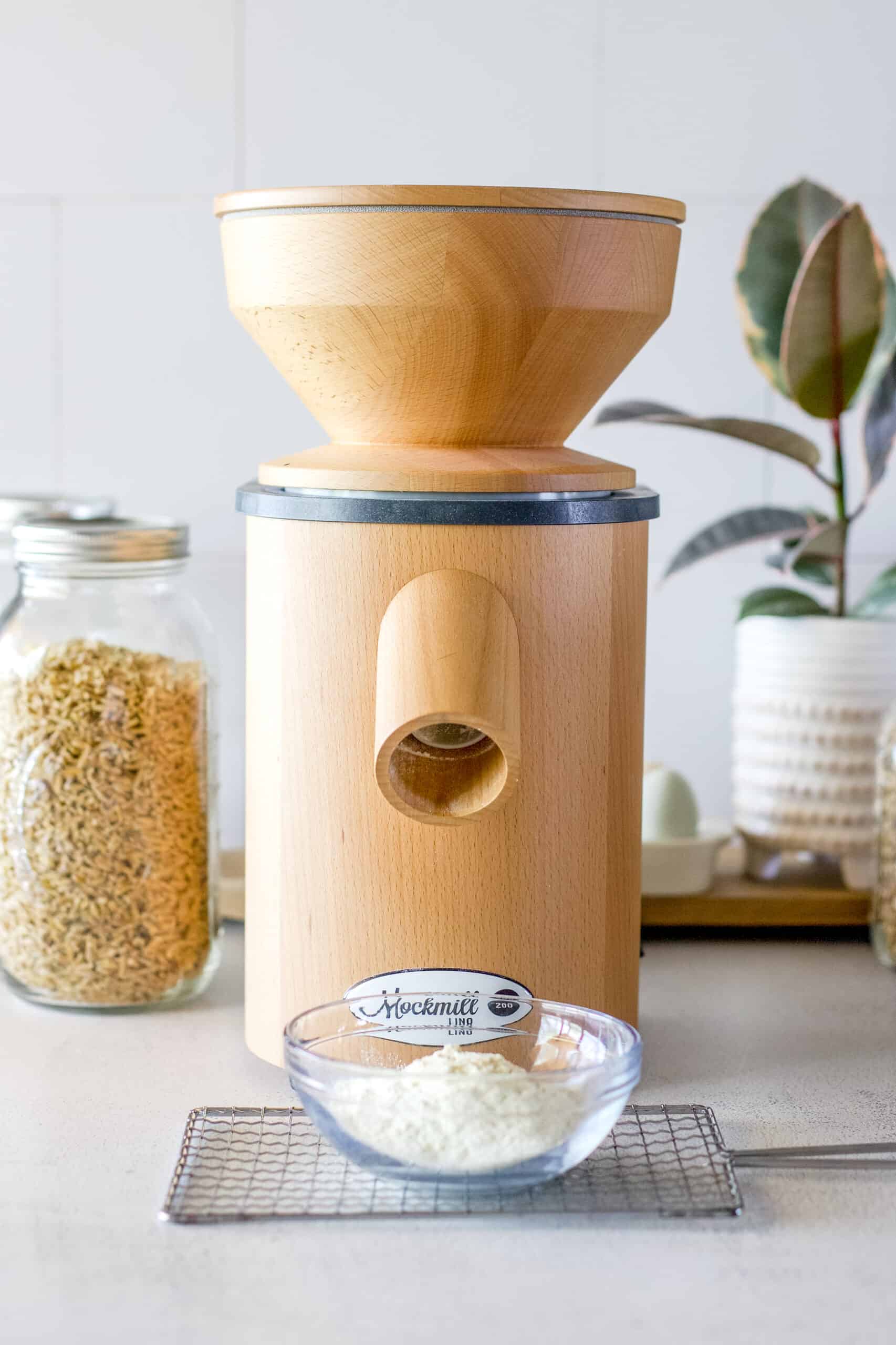
Mockmill Lino 100 or 200 – This mill is a true workhorse in a beautiful wood housing. It uses large corundum-ceramic stones and a powerful motor, so it mills quickly and adjusts smoothly from coarse to ultra-fine flour without strain. It holds nearly 3 pounds of grain and feels very professional to use. I own the Lino 200 and love its strength and efficiency. The main drawback is the price. When I was shopping, the Harvest was my first choice, but it was out of stock for months. If it had been available, I would’ve chosen it simply because it offers similar performance at a lower cost. Overall, I'm very happy with my Mockmill.
Komo Mill - A KoMo mill is a “buy it once and be done” kind of machine. These Austrian-engineered, German-made stone mills are built to last and grind grain slowly and evenly, keeping flour cool and nutrients intact. The biggest challenge is availability, they sell out quickly and certain models can be hard to find. They’re also the most expensive option on this list, but if you manage to get one, it’s a long-term investment for serious home milling.

Which Wheat Berries are Best to Use in a Grain Mill for Making Flour at Home?
Don't be scared to experiment with a variety of grains! Each will have it's own unique flavor and different textures. You will begin to learn what works best for your recipes. I'm going to share my personal preferences, but they are by no means a gold standard. I'm just a baker, mixing up dough in my kitchen, sharing what works for me. My favorite grains to mill (so far) are hard white, red fife, einkorn & khorasan. I also mill gluten-free grains like sorghum, millet, buckwheat and brown rice.
Hard White Wheat Berries
If you're looking for a versatile and nutritious wheat variety to use in your baking, hard white wheat is a great choice. This type of wheat is known for its high protein content, which makes it perfect for creating doughs with a strong gluten structure. Hard white wheat flour produces a slightly nutty and sweet flavor in baked goods. This can complement a wide range of ingredients and flavors. It's also a great source of fiber, iron, and other essential nutrients, making it a healthy choice for bread, pasta, and other baked goods. I use this more than all of the other wheat berries in my pantry.
Kamut Wheat Berries (aka Khorasan)
Kamut, also known as Khorasan wheat, has a rich, buttery flavor and a chewy texture that makes it perfect for bread and pasta doughs. It's also known for its high protein and mineral content, making it a nutritious option for quick breads and cookies. Kamut is an ancient grain that has remained largely unchanged over the centuries, and many people who are sensitive to modern wheat find that they can tolerate kamut better due to its unique protein composition. Personally, I love milling and baking with khorasan!
Einkorn Wheat Berries
If you're a fan of rustic, hearty breads and baked goods, einkorn wheat is definitely worth exploring. It's also tricky to bake with due to the way it absorbs water, so just consider yourself warned! Einkorn is one of the oldest cultivated grains in the world and has a rich, nutty flavor that can add depth to your baking creations. It's also known for its high protein content and gluten structure, which can make for a sturdy and flavorful dough. Einkorn is a nutritious wheat variety that's packed with vitamins and minerals, including B vitamins, iron, and zinc. Because einkorn has a different gluten structure than modern wheat, it can be easier to digest for people with gluten sensitivities.
Red Fife Wheat Berries
Red fife is a heirloom variety that has been grown in Canada for over 150 years. It is known for its nutty, earthy flavor that can add depth to your breads and other baked goods. Red fife wheat is also high in protein and fiber, making it a nutritious choice for your daily baking. This wheat variety has a softer gluten structure than some others, which can result in a tender crumb and a delicate texture.
Soft White Wheat Berries
This is my go-to for baked goods where I want tenderness, not chewiness. I use them for cookies, muffins, pancakes, biscuits, and cakes because soft white berries have lower protein and don't build strong gluten. When milled fresh, they have a mild flavor and behave similarly to all-purpose flour.

How to Convert a Recipe From All-Purpose Flour to Freshly Milled
Switching a recipe from store-bought all-purpose flour to freshly milled flour can feel intimidating at first, but it’s really not hard once you understand a few basics. The biggest thing to remember? Freshly milled flour is often described as “alive.” It has all the bran and germ intact, which means it holds more moisture and has a slightly coarser texture than refined flour. That can make your doughs behave a little differently—sometimes heavier, sometimes thirstier for water.
When you’re first starting out, it’s smart to take it slow. Instead of swapping it cup-for-cup right away, try replacing about 25% of the all-purpose flour in your favorite recipe with fresh-milled flour. Watch how it behaves. You might find you need to add a little more liquid or give the dough extra time to hydrate. Once you’re comfortable, you can increase the ratio until you’re using 100% fresh-milled flour.
Here’s a handy general conversion for your grain-to-flour yield: about ⅓ cup wheat berries mills into roughly ½ cup flour, and 1 cup wheat berries will give you about 1 ½ cups flour, depending on the grain and grind size. Keep this in mind when you’re measuring out grain to mill for a recipe. It’s easy to under- or over-mill if you’re not expecting that increase.
For the most accurate results, weighing is always better than measuring by volume. Wheat berries and flour weigh nearly the same before and after milling, so using a kitchen scale removes a lot of guesswork.
Once you get the hang of it, you’ll realize that converting recipes is more about feel than exact numbers. Pay attention to your dough or batter. Does it seem dry? Add a splash more liquid. Too wet? A spoonful of extra flour usually fixes it. With practice, you’ll know exactly how your fresh flour behaves, and your recipes will only get better for it.
Freshly Milled Flour Absorbs More Liquid
Freshly milled flour often requires more liquid than all-purpose flour to achieve the right dough or batter consistency. Because the bran and germ are still intact, fresh flour absorbs moisture more readily, especially after it has time to hydrate.
If your dough or batter feels dry, add small amounts of liquid until it reaches the consistency you’re used to working with. Fresh flour can also affect bake time, so it’s important to keep an eye on your baked goods. Depending on the recipe, they may bake slightly faster or need a bit more time than versions made with all-purpose flour.

Top Tip: Measure by Weight
My top tip for converting recipes is to measure by weight instead of cups. When your specific type of flour comes out of the stone grinder or electric mill, it will be very lofty and airy. If you try to measure a cup of it for your recipe, odds are it will give you a false reading. Every wheat has a specific weight, and I can't stress enough how important it is to use this measurement for baking! Ask me about my fresh milled kamut blueberry muffins sometime...
Where to Buy Wheat Berries
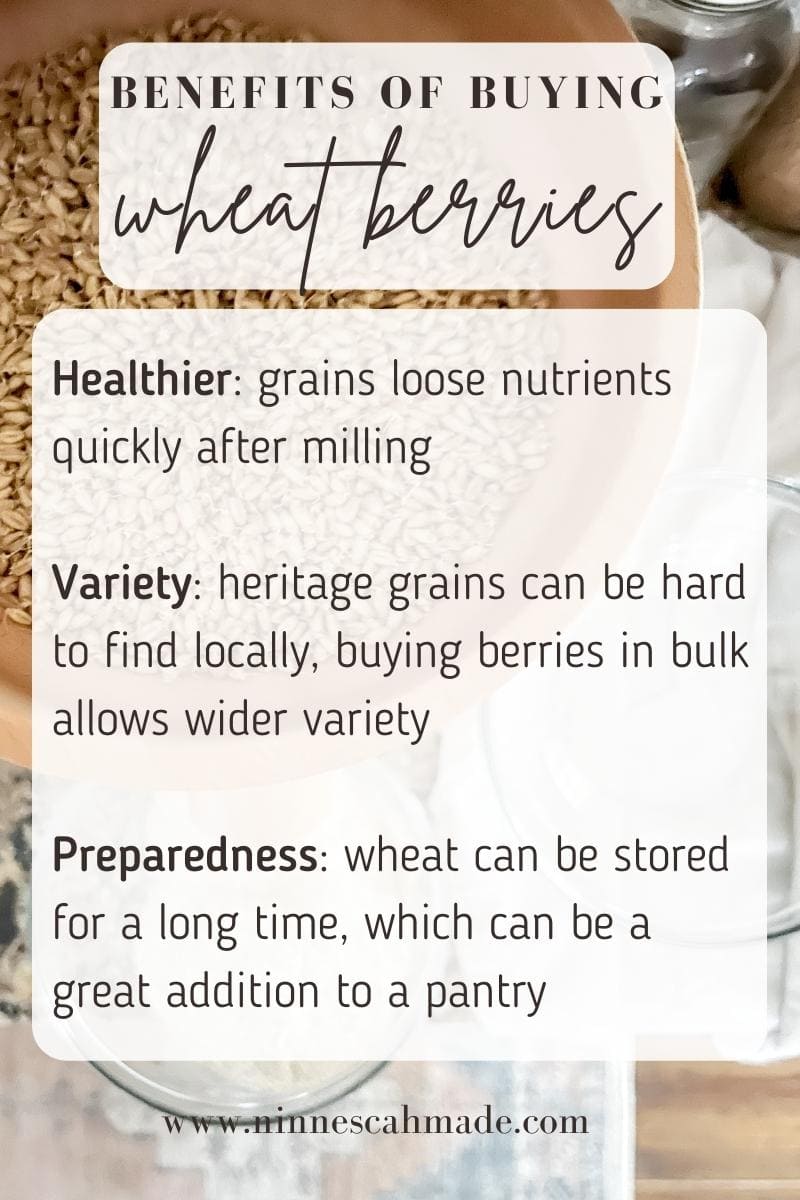
When it comes to buying wheat berries, I stick to a few trusted sources. Palouse is an American company that that sells high-quality, Non-GMO Project Verified wheat berries. Their grain is desiccant-free (no glyphosate, guaranteed), which matters to me. I especially love their variety bundle with hard white (perfect for sandwich bread), soft white (great for cookies and cakes), and hard red wheat (my go-to for sourdough).
I also order from Azure Standard, where I buy bulk wheat along with rye, oats, spelt, and millet as well as my other household staples. All of our grain is stored in 5-gallon buckets with gamma lids, which I also purchase through Azure. If you’re new to Azure Standard, you can save on your first order by using my code MEGANAUSTIN1.

Frequently asked questions about choosing a grain mill for making flour at home & milling wheat
Using freshly milled wheat for baking is a fun and rewarding experience that can take your baking to the next level. Don't be afraid to experiment with different grains and recipes - the possibilities are endless!
Absolutely! You can use a variety of grains, such as wheat, spelt, rye, and more. Just make sure you're using high-quality, organic grains for the best results.
If you've milled your flour correctly, it should be a fine, even texture with no large pieces of grain remaining. You can test the flour by rubbing it between your fingers - it should feel silky smooth.
Yes, you can use freshly milled flour in any recipe that calls for all-purpose flour. However, you will need to make some adjustments to account for the differences in flour. These may include adjusting the amount of liquid, rest time or bake time.
Freshly milled flour is more nutritious and flavorful than store-bought flour. It contains all of the natural oils and nutrients from the grain. It also produces baked goods with a more complex and satisfying flavor and texture.
An oily grain, like a coffee bean, soy bean or peanut, will produce an oily film when milled. This oil will leave a residue on the grinding plates of the mill, causing major problems. Stick to dry grains to protect the longevity of your mill.
How To Use a Grain Mill
Mill your own flour at home using a grain mill
Instructions
- The first step in milling your own flour is choosing the grain. There are a variety of grains you can use, including hard white wheat, kamut, einkorn, and more. You can even mix different grains together to create your own unique flour blend. Just make sure you're using high-quality, organic grains for the best results.
- Once you have your grains, it's time to set up your grain mill. Most grain mills come with instructions on how to assemble them, so be sure to follow those carefully. You'll also want to make sure your mill is securely positioned on a sturdy surface, such as a countertop or workbench.
- Before you start milling your grain, you'll need to adjust your mill. Select how finely you want your flour milled. This can take a bit of trial and error, but most mills have an adjustable knob that allows you to control the coarseness of the grind. Most mills come with a guide that tells which setting to select for the grain you are milling.
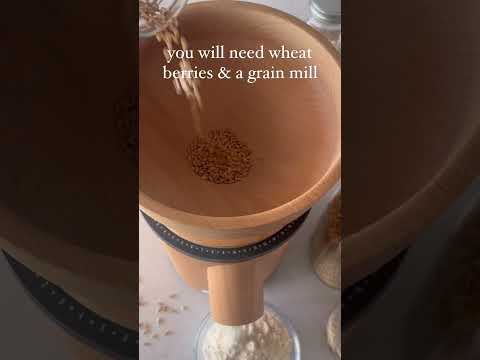
- Now it's time to start milling! Simply pour your grain into the hopper at the top of the mill and turn the machine on. As the grain is fed through the mill, it will be cracked and ground into flour. Depending on the size of your mill and the amount of grain you're milling, this process can take anywhere from a few minutes to an hour or more.
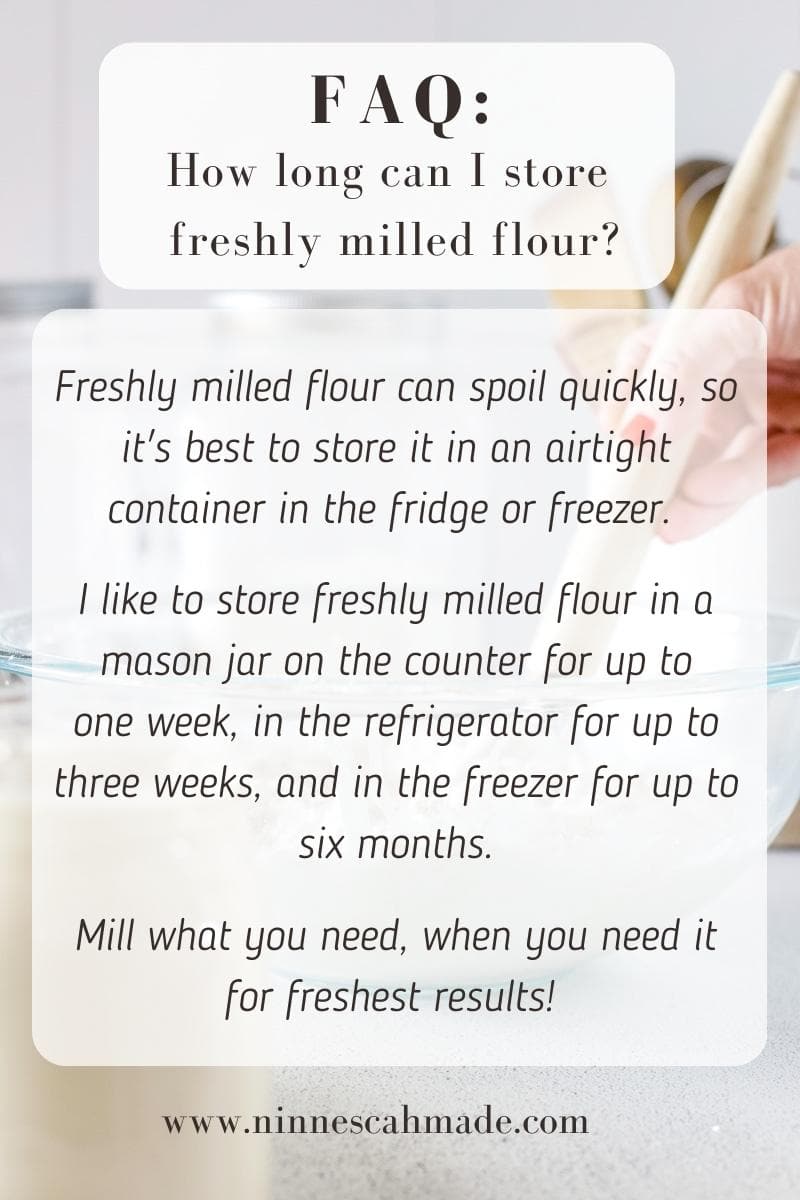
- Once you've milled your flour, it's important to store it properly. Freshly milled flour can spoil quickly, so it's best to store it in an airtight container in the fridge or freezer. This will help keep it fresh and prevent any unwanted moisture or odors from affecting the quality of the flour.
Video
Notes
As an amazon associate, this post contains affiliate links, which means I make a small commission at no extra cost to you. See my full disclosure here.
Other posts you will love!
If you’re ready to start baking with freshly milled flour, I have a few helpful posts to guide you. Start with my post on how to make a sourdough starter from scratch, then move on to baking your first loaf of sourdough bread, where I walk through the full process step by step.
For everyday baking, be sure to check out my Whole Wheat Sourdough Sandwich bread and Whole Wheat Sandwich Bread, both made with fresh-milled flour and designed for soft, sliceable loaves your family will actually eat.
Once you have mastered the basic sourdough loaf, the next step is sourdough Focaccia, Pizza Crust and Sourdough Sandwich bread! And don't forget, there are plenty of delicious ways to use up leftover sourdough discard. The most popular recipe on this blog has been Sourdough Discard Coffee Cake for nearly the past year. It's very easy and super simple! I also highly recommend Cheesy Sourdough Discard Crackers.
- How to Use Antique Butter Molds (And Where to Find Them)

- Why Are My Tomato Leaves Curling? How to Spot Herbicide Drift Damage
- Old-Fashioned Potato Salad with Shredded Potatoes
- Easy Pizza Pasta Bake (Ground Beef or Venison)
- Why Jersey Cows Are the Best Family Milk Cow for Homesteads
- How to Make and Maintain a Clabber Culture




Such a great article to help decide how to incorporate a variety of grains into my breads! Loving your Instagram and recipes! So many I plan to try.