
Are Coffee Grounds Good for Tomato Plants? Yes and no.
Ever wondered if tossing those leftover coffee grounds onto your tomato plants is actually worth it? Well, you're not alone. I was teaching a beginner gardening class at our local library a few weeks ago, and this very question came up. I know there are a lot of myths out there when it comes to gardening, and sometimes it can get confusing. I'm going to help you out if you've ever wondered, "are coffee grounds good for tomato plants?"
Jump to:
- Do tomatoes like coffee grounds?
- Are Coffee Grounds Good for Tomato Plants?
- What Research Says About Spent Coffee Grounds
- What Kind of Coffee Grounds Can You Use in the Garden?
- Benefits of Coffee Grounds for Tomato Plants
- Disadvantages of Coffee Grounds for Tomato Plants
- Ideal Soil PH for tomatoes
- How to add coffee grounds to the garden
- Other kitchen scraps that can be used in the garden?
- My favorite amendments for tomatoes
- Making Compost for Tomatoes
- Frequently Asked Questions
- MORE GARDENING POSTS YOU'LL LOVE
- Comments
Are Coffee Grounds Good for Tomato Plants?
Short answer: yes—but how you use them matters. Spent coffee grounds contain nitrogen and smaller amounts of other plant nutrients, but I don't think of them as fertilizer for my tomatoes. Their real value is as organic matter, especially after they've been composted. They can help build healthier soil, support microbial activity, and eventually return nutrients to the garden as they break down.
What I don't recommend is repeatedly dumping fresh coffee grounds around the base of your tomato plants. Thick layers can compact, hold too much moisture, and interfere with airflow at the soil surface. And despite the common advice that coffee grounds will acidify your soil, spent coffee grounds aren't a reliable way to lower soil pH.
Moderation is key! Don't get in the habit of emptying your coffee maker basket over the same spot every day. An occasional handful isn't going to hurt anything, but repeatedly piling grounds around your plants can create problems.
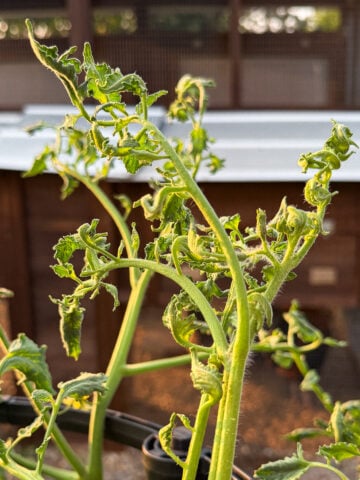
Curling or distorted leaves can also be a sign of herbicide drift on tomatoes, so rule that out before assuming your plants need another amendment.
What Research Says About Spent Coffee Grounds
One reason there is so much conflicting gardening advice online is that people often confuse brewed coffee with spent coffee grounds. Used coffee grounds are not highly acidic. The brewing process removes much of the acidity, and spent grounds are generally close to neutral. If your goal is to lower your garden's soil pH, coffee grounds aren't a reliable way to do it.
Coffee grounds are best used as a compost ingredient rather than applied heavily and repeatedly around tomato plants. They contain nitrogen-rich compounds and small amounts of essential plant nutrients, but those nutrients aren't an instant fertilizer for your tomatoes. Soil microbes first break down the organic matter, gradually returning nutrients to the soil.
This is why many gardeners see better results when coffee grounds become part of a healthy compost pile instead of being used as a thick top dressing around plants. Once composted, coffee grounds can help improve soil structure, increase organic matter, and contribute to healthy soil that supports strong root growth.
In my experience, the biggest difference is fresh grounds versus composted grounds. A small amount of composted coffee grounds mixed into garden beds is very different from repeatedly dumping fresh coffee grounds around the base of tomato plants. While composted grounds can be a valuable soil amendment, excessive layers of fresh grounds may create a dense surface that can interfere with soil moisture, airflow, and overall soil quality.
For most home gardeners, the best way to incorporate coffee grounds is to add them to a compost pile along with other brown materials and organic matter. Over time, the finished compost becomes a healthy mix that can be worked into the tomato garden to improve soil health naturally.
What Kind of Coffee Grounds Can You Use in the Garden?
Stick with plain, spent coffee grounds. Regular used coffee grounds are fine for the compost pile whether the coffee itself was organic or conventionally grown.
I avoid flavored coffees or grounds that have been mixed with creamers, sweeteners, or other ingredients. When I'm adding something to my compost and eventually my garden soil, I like to know exactly what's going into it.
The bigger distinction, though, isn't the type of coffee—it's how you use the grounds after brewing. Plain coffee grounds added to a balanced compost pile are very different from repeatedly dumping fresh piles of them around your tomato plants.
Benefits of Coffee Grounds for Tomato Plants
- Coffee grounds can be a useful addition to a healthy tomato garden, especially when they're composted first. Their biggest benefit isn't acting as a quick fertilizer—it's contributing organic matter and nutrients to the soil as they break down.
- Add organic matter: Composted coffee grounds add organic material to garden soil, which helps support good soil structure and a healthy soil ecosystem.
- Return nutrients to the soil: Coffee grounds contain nitrogen along with smaller amounts of other plant nutrients. As the grounds decompose, microbes break down the organic material and those nutrients become part of the soil nutrient cycle.
- Support microbial activity: Coffee grounds provide organic material for soil organisms to break down. Those microbes are an important part of the process that turns compost and other organic matter into healthy garden soil.
- Improve soil structure: Finished compost containing coffee grounds can help build soil that holds moisture while still allowing air and water to move through the root zone—exactly what I want when I'm growing tomatoes.
Disadvantages of Coffee Grounds for Tomato Plants
- The biggest problem with coffee grounds is overusing them. A little organic material is one thing; repeatedly dumping thick layers of spent grounds around your tomato plants is another.
- They can form a dense layer: Coffee grounds are made of very fine particles. When applied heavily to the soil surface, they can compact together and interfere with the movement of air and water into the soil.
- They can hold too much moisture at the surface: A thick, wet layer around the base of a tomato plant isn't something I want sitting there for long periods. Tomatoes need consistent moisture, but they also need well-drained soil and good airflow.
- Fresh grounds aren't finished compost: Coffee grounds still need to decompose. Rather than asking that process to happen in a concentrated layer around my tomato roots, I'd rather let it happen in the compost pile alongside the rest of my kitchen and garden waste.
- More isn't better: Coffee grounds shouldn't replace balanced compost, appropriate fertilizer when it's needed, or a soil test. They're one ingredient I can recycle back into my garden—not a complete tomato-growing system.
Ideal Soil PH for tomatoes
Tomatoes grow best in slightly acidic soil, generally around a pH of 6.0 to 7.0. In this range, the nutrients tomato plants need are readily available to their roots.
But here's where one of the biggest coffee-ground myths comes in: spent coffee grounds aren't a reliable way to lower your soil pH. Brewed coffee is acidic, but most of that acidity is water-soluble and leaves the grounds during brewing. Used grounds are generally much closer to neutral.
So if your soil test shows that your garden pH needs adjusting, use an amendment intended for that purpose rather than trying to correct it with coffee grounds.
I use coffee grounds to add organic material to my compost—not to change the pH of my tomato beds.
How to add coffee grounds to the garden
- The best way to use coffee grounds in my tomato garden is to compost them first. Instead of dumping the grounds directly around my plants, I add them to my compost pile along with the rest of our kitchen and garden waste.
- Add spent grounds to your compost pile: Used coffee grounds are considered a nitrogen-rich—or “green”—compost material. Add them along with carbon-rich “brown” materials like dry leaves, straw, shredded paper, or cardboard to keep the pile balanced.
- Let the compost do the work: As the pile decomposes, microbes break down the coffee grounds along with the other organic material. By the time the compost is finished, you're no longer dealing with a concentrated layer of coffee grounds. You have dark, crumbly compost full of decomposed organic matter.
- Add the finished compost to your tomato beds: Work finished compost into the soil before planting or add it around established tomato plants as a top dressing. This is how I prefer to get the benefits of my used coffee grounds back into the garden.
- Don't overthink the occasional handful: If you've tossed a small amount of spent coffee grounds around a tomato plant before, you haven't ruined anything. The problem is repeatedly piling concentrated grounds around the same plants. From here on out, send them to the compost pile instead.
Other kitchen scraps that can be used in the garden?
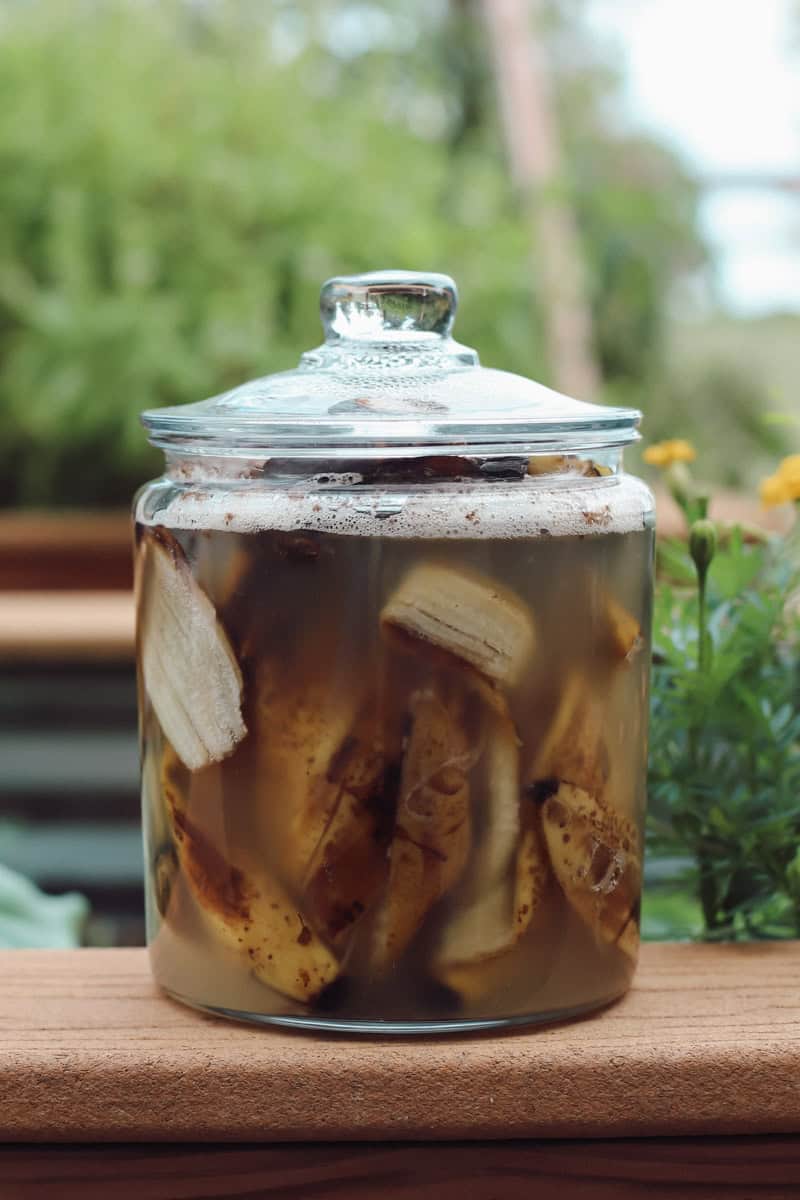
Coffee grounds aren't the only kitchen scraps gardeners save for tomato plants. Banana peels, eggshells, vegetable scraps, coffee grounds, tea leaves, and other plant-based kitchen waste can all become part of a healthy compost pile.
Banana peels contain potassium, eggshells contain calcium, and vegetable scraps contribute a range of nutrients and organic matter. But I don't rely on individual kitchen scraps as fertilizer. I compost them first. Breaking them down into finished compost makes much more sense to me than burying banana peels or sprinkling eggshells around individual tomato plants.
I mix those nitrogen-rich “green” materials with carbon-rich “brown” materials like dry leaves, straw, shredded paper, or cardboard. Once everything is dark, crumbly, and fully decomposed, that finished compost goes back into my garden beds.
To learn more about how to use eggshells in the garden, read Can You Compost Eggshells for Plants?
My favorite amendments for tomatoes
Coffee grounds aren't a complete fertilizer, so they shouldn't be expected to provide everything a tomato plant needs. Depending on your soil, you may come across recommendations for Epsom salt, blood meal, and bone meal when growing tomatoes.
Epsom salt contains magnesium and sulfur. I only use it when there's a reason my soil or plants need additional magnesium—not as a routine tomato fertilizer.
Blood meal is a concentrated source of nitrogen. It can be useful when soil needs additional nitrogen, but tomatoes don't automatically need more of it. Too much nitrogen can give you a beautiful leafy tomato plant without necessarily giving you more tomatoes.
Bone meal provides phosphorus and calcium. Whether it's useful depends on what's already available in your soil, which is why a soil test is much more helpful than automatically adding it every year.
That's another reason I don't treat coffee grounds—or any single amendment—as a magic ingredient for tomatoes. Build good soil first, then add specific nutrients when your soil actually needs them.
Making Compost for Tomatoes
If you're saving coffee grounds for your tomato plants, the compost pile is where I'd put them. Used coffee grounds are a nitrogen-rich “green” compost material, so I add them alongside kitchen scraps, grass clippings, and other green materials.
Balance those with plenty of carbon-rich “brown” materials such as dry leaves, straw, shredded cardboard, or paper. You can toss the paper coffee filter in too, as long as it's compostable.
Don't let coffee grounds take over the pile. A good rule of thumb is to keep them to around 20% or less of the total compost pile by volume. Coffee grounds are useful, but a healthy compost pile needs a mixture of materials—not five months' worth of Starbucks dumped into one heap. 😂
Keep the pile moist but not soggy and turn it periodically to introduce oxygen and help everything decompose. Over time, those recognizable kitchen and yard scraps will break down into dark, crumbly finished compost.
That's what I want around my tomatoes: finished compost that contains coffee grounds, rather than a concentrated layer of coffee grounds sitting around the roots.
Once the compost is finished, work it into your garden beds before planting or use it as a top dressing around established tomato plants.
Read my post Cheap Ways to Add Nitrogen to the Soil if you want to learn more!
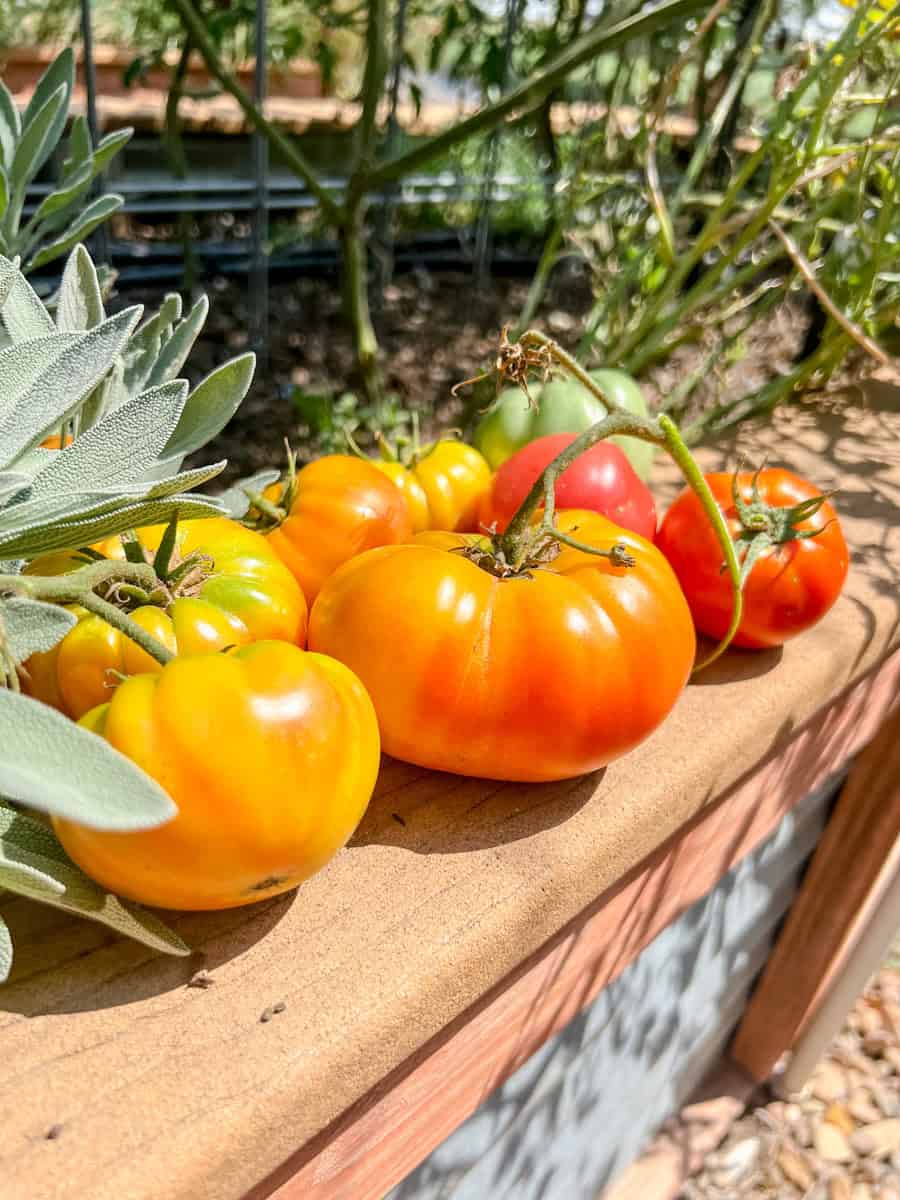
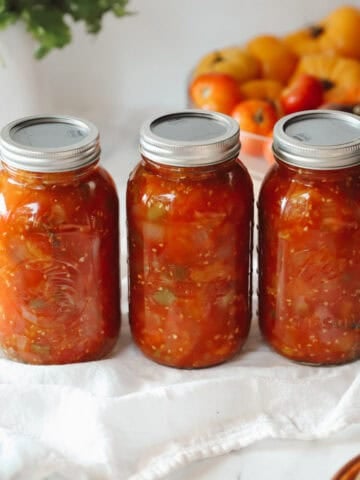
The picture below is from last fall. We were about to have a hard freeze, so I picked every tomato from the raised bed and let them ripen slowly indoors.

Frequently Asked Questions
Spent coffee grounds aren't a reliable way to lower your garden soil pH. Although brewed coffee is acidic, much of that acidity is removed during brewing, leaving used grounds much closer to neutral. Tomatoes prefer slightly acidic soil, generally around 6.0 to 7.0, but if your soil pH needs adjusting, use a soil test and an amendment intended for that purpose.
Yes, especially when the coffee grounds are composted first. Coffee grounds add organic material and contain nitrogen along with smaller amounts of other plant nutrients. I add spent grounds to my compost pile, let them decompose with other kitchen and garden waste, and then add the finished compost to my tomato beds. That's a much better use for them than repeatedly dumping fresh grounds around the plants.
Neither is my preferred method. I compost coffee grounds first. Thick layers of spent grounds can compact on the soil surface and interfere with air and water movement. Instead, I add them to a balanced compost pile and use the finished compost around my tomato plants. If you've occasionally sprinkled a small amount of grounds around a plant, don't panic—the problem is repeatedly applying concentrated layers.
Yes, coffee grounds can cause problems when they're overused. Repeatedly applying thick layers can create a dense, moisture-retaining layer at the soil surface. Coffee grounds also aren't a complete fertilizer, so relying on them to feed your tomatoes can leave the plants without the balanced nutrition they need. I prefer to compost my grounds first and use the finished compost in the garden.
Yes, coffee grounds can be good for tomato plants when they're used correctly. Their biggest value is as organic material rather than a direct tomato fertilizer. I recommend adding spent coffee grounds to a compost pile, letting them fully decompose, and then using the finished compost in your tomato beds. Don't rely on coffee grounds to fertilize your tomatoes or lower your soil pH.
MORE GARDENING POSTS YOU'LL LOVE
Once you've found yourself bitten by the garden bug, you'll find yourself wanting to know everything! Check out my post How to Grow Tomatoes, Guide for Growing Potatoes or How to Save Sunflower Seeds. And don't forget about Composting Egg cartons!
Happy gardening!
Meg





I read this blog shortly after you shared it, I have been saving my coffee grounds ever since. I'm very excited to use them when I plant my tomatoes next month.