
Old-Fashioned Pickled Beets Recipe (Refrigerator or Canned)
This old-fashioned pickled beets recipe uses apple cider vinegar, sugar, and fresh oranges to make sweet, tangy beets that can be enjoyed as a quick refrigerator pickle or safely preserved with water bath canning. Whether you're harvesting beets from the garden or buying them fresh at the farmer's market, this recipe walks you through every step.

I love pickling small diced beets to add to a spinach salad with goat cheese, red onions and grilled venison steak! It's also a great way to use up smaller beets on a relish tray or holiday spread. If you have a big beet harvest, pickling them is one of my favorite ways to preserve them.
Once you try this easy recipe, you'll feel like a master food preserver (I'm not kidding!). And if this lights your fire to use your water bath canner even more, be sure to check out my easy canned peaches, old-fashioned peach preserves and canned sweet corn tutorials!
Jump to:
Why You’ll Love This Pickled Beets Recipe
- Quick & Simple: You don’t need a lot of time or complicated steps.
- Versatile: Enjoy immediately as a refrigerator pickle or process for pantry storage. Read a little further down in this beet recipe for instructions!
- Flavorful: The kick of apple cider vinegar, the sweetness of orange, and the spice from peppercorns make for a unique pickle brine.
- Preserve Your Beet Harvest: Whether your beets come from the garden, farmers market, or grocery store, this recipe is a delicious way to enjoy them for weeks or even months.
Ingredients

- Beets – Choose medium beets that can be fresh from the garden or store-bought. You can roast or boil these depending on your preference, I've included instructions below for both ways.
- Apple cider vinegar (5% acidity) – Gives these pickled beets their signature flavor and provides the proper acidity for safe water bath canning.
- Water
- Sugar
- Pickling salt - If you don't have pickling salt, substitute kosher.
- Orange – You’ll use both peel and juice. Today I'm using blood oranges.
- Whole black peppercorns & coriander seeds
See recipe card for quantities.
Why I Use Apple Cider Vinegar for Pickled Beets
I prefer apple cider vinegar because it gives pickled beets a smoother, richer flavor than white vinegar. The slight sweetness pairs perfectly with the earthy beets and fresh orange, creating a pickle brine that's tangy without being overly sharp.
White vinegar works too, and you can substitute it if that's what you have on hand. Just be sure you're using a vinegar labeled 5% acidity, whether it's apple cider vinegar or white vinegar. That acidity is what makes this recipe safe for water bath canning.
Instructions
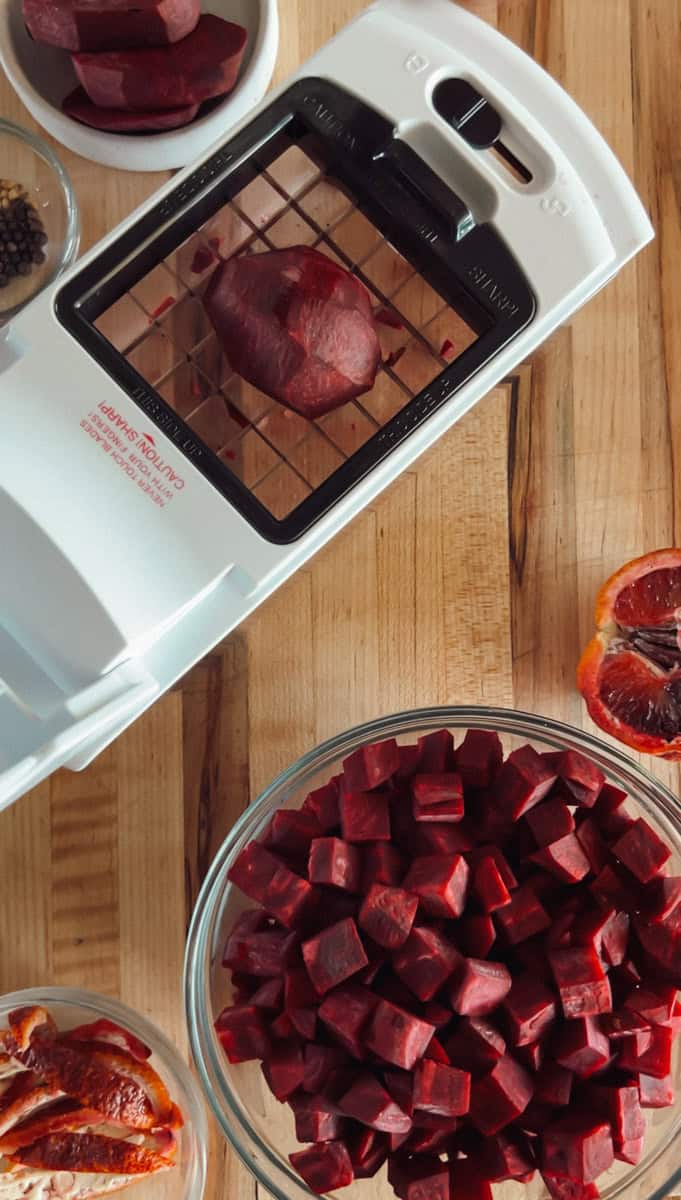
- Cut off the greens and the end root from your beets. Give them a good wash and scrub to remove any dirt.
- Once cleaned, peel the skin off. You can use a vegetable peeler, or if you’ve roasted the beets, the skins will slip right off after cooling.
- Slice the beets into small pieces, either half-inch slices or quarters, depending on the size. A food chopper works great for even pieces!

4. In a medium saucepan, combine apple cider vinegar, water, sugar, pickling salt, orange juice, orange peel, coriander and peppercorns. Bring the mixture to a boil, stirring until the sugar is dissolved.
5. Once the sugar has dissolved, reduce the heat and let the brine simmer for about 3 minutes to allow the flavors to meld.
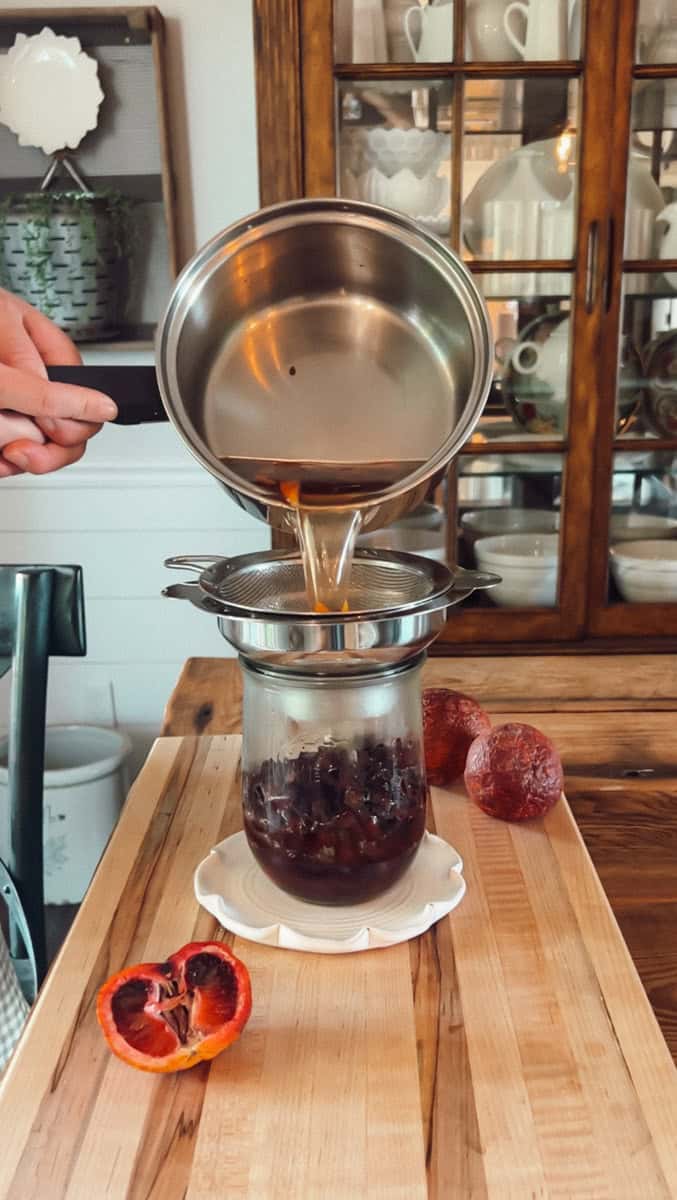
6. Roast beets in the oven or cook them in a skillet (see note below). Place the cooked beets into a clean glass jar. Pour the hot brine over the beets, making sure they are fully covered.
NOTE: If you want to strain the brine for a smoother texture, you can do so at this point.

7. Cover the jar tightly with a lid and allow it to cool completely on the counter.
8. Once cool, transfer the jar to the refrigerator.
How to Can Pickled Beets
If you'd like to enjoy these pickled beets year-round, you can safely preserve them using a water bath canner.
- Prepare your water bath canner according to the manufacturer's instructions and bring the water to a gentle boil.
- Wash your canning jars, lids, and bands in hot, soapy water. Keep the jars hot until you're ready to fill them.
- Pack the cooked beets into the hot jars, leaving ½ inch of headspace.
- Pour the hot pickling brine over the beets, maintaining ½ inch of headspace.
- Slide a bubble remover or plastic utensil around the inside of each jar to release any trapped air bubbles. Add more brine if needed to maintain the proper headspace.
- Wipe the jar rims with a clean, damp cloth. Center the lids on the jars and screw the bands on until they're fingertip tight.
- Place the jars in the boiling water bath, making sure they're covered by at least 1 inch of water. Once the water returns to a full rolling boil, process the jars for 10 minutes. If you live above 1,000 feet in elevation, adjust the processing time according to current USDA altitude recommendations.
- Carefully remove the jars and place them on a towel or cooling rack. Let them cool undisturbed for 12 to 24 hours.
- After the jars have cooled, check that each lid has sealed. The center of the lid should be slightly concave and should not flex when pressed. Refrigerate any jars that didn't seal and enjoy them within a few weeks.
Store sealed jars in a cool, dark place for up to 12 to 18 months, although they're best enjoyed within one year for the best flavor and quality. Properly canned pickled beets are shelf stable until opened.
How to Cook Beets Before Pickling
Skillet Method for Beets (Recommended)
- Chop the peeled beets into even pieces. I'm using a chef chopper and it is super handy!
- Heat a skillet and add a tablespoon of oil. Add the beets to the skillet and sauté until cooked through. It will take about 15 minutes.
Roasting Method for Beets
- Preheat your oven to 400°F.
- Rub the beets with a little olive oil and wrap them tightly in foil.
- Roast for about 1 hour, or until the beets are tender enough to be pierced with a fork.
- Allow them to cool slightly, then slice them into your preferred shape.
Tips & Variations
- You can add a cinnamon stick or cloves to the brine for a little extra warmth, or even a dash of mustard seeds for a unique flavor.
- If you like a little heat, throw in a sliced jalapeño or red chili flakes with the peppercorns.
- Quick Tip for Peeling Beets: After roasting or boiling, you can rub the skin off the beets with your fingers. The skin will slide right off, saving you some time.
- We also love serving these alongside venison burgers, smoked brisket, pulled pork, sandwiches, or on a holiday relish tray.
How Long Do Pickled Beets Last?
Refrigerator Pickled Beets
Store refrigerator pickled beets in an airtight glass jar in the refrigerator. For the best flavor, let them sit for at least 24 hours before serving so the beets have time to absorb the brine.
They'll stay fresh for up to 3 to 4 weeks in the refrigerator as long as the beets remain covered by the brine and are handled with clean utensils each time you serve them.
Water Bath Canned Pickled Beets
Properly sealed jars can be stored in a cool, dark pantry for 12 to 18 months. For the best flavor and quality, I recommend enjoying them within one year.
Once a jar is opened, refrigerate it and use the pickled beets within 3 to 4 weeks.
Frequently Asked Questions
Absolutely! Golden beets can be substituted using the exact same recipe and process. They'll have a slightly milder, sweeter flavor than red beets and won't stain everything bright pink, but they'll pickle beautifully.
Yes. White vinegar works just as well as apple cider vinegar as long as it's labeled 5% acidity. Apple cider vinegar gives these pickled beets a slightly smoother, richer flavor that pairs well with the orange, while white vinegar creates a brighter, sharper pickle.
Yes. Fresh beets should be cooked until fork tender before they're added to the pickling brine. You can roast, boil, or sauté them using any of the methods in this recipe.
Yes. Plain canned beets packed in water work well for refrigerator pickled beets because they're already fully cooked. I don't recommend using commercially canned beets for water bath canning since they've already been processed once.
Soft pickled beets are usually the result of overcooking before they're pickled. Cook them just until they're fork tender, then immediately add them to the hot brine. Starting with fresh, firm beets also helps them keep their texture.
Yes. If you're using plain canned beets packed in water, drain them well and prepare the refrigerator version of this recipe. Since the beets are already fully cooked, simply pour the hot brine over them and refrigerate. I don't recommend reprocessing commercially canned beets for long-term shelf storage.
Making pickled beets is such a fun way to preserve that harvest from your garden (or farm stand haul)! Whether you go for the quick and easy refrigerator pickle method or take it up a notch with water bath canning for long-term storage, these pickled beets are bound to become your new favorite snack or side dish. Sweet, tangy, and just the right amount of spice—you’ll be enjoying these all year long!
Happy homesteading!
- Meg
More Garden to Table Recipes
Looking for other recipes like this? Try these:


Latest Posts
Here's what's happening on the homestead!


Recipe

Pickled Beets (Refrigerator & Canning Recipe)
Equipment
- water bath canner optional
Ingredients
- 2 pounds beets about 3-4 medium beets
- 1 cup apple cider vinegar
- 1 cup water
- ¼ cup sugar
- 1 teaspoon pickling salt
- 1 orange peel and juice
- 1 teaspoon peppercorns whole seeds
- 1 teaspoon coriander whole seeds (optional)
Instructions
- Cut off the greens and the end root from your beets. Give them a good wash and scrub to remove any dirt.
- Once cleaned, peel the skin off. You can use a vegetable peeler, or if you’ve roasted the beets, the skins will slip right off after cooling.
- Slice the beets into small pieces, either half-inch slices or quarters, depending on the size. A food chopper works great for even pieces!
- In a medium saucepan, combine apple cider vinegar, water, sugar, pickling salt, coriander, orange juice, orange peel and peppercorns. Bring the mixture to a boil, stirring until the sugar is dissolved.
- Once the sugar has dissolved, reduce the heat and let the brine simmer for about 3 minutes to allow the flavors to meld.
- Place the cooked beets into a clean glass jar. Pour the hot brine over the beets, making sure they are fully covered.
- Cover the jar tightly with a lid and allow it to cool completely on the counter.
- Once cool, transfer the jar to the refrigerator. The beets will keep for about one week in the fridge, making this the perfect quick pickle recipe!
Notes
- Preheat your oven to 400°F.
- Rub the beets with a little olive oil and wrap them tightly in foil.
- Roast for about 1 hour, or until the beets are tender enough to be pierced with a fork.
- Allow them to cool slightly, then slice them into your preferred shape.
- If you prefer boiling, slice the beets in half (if they’re large), and place them in a large saucepan. Cover them with about 1-inch of water.
- Bring the water to a boil on high heat, then reduce to a simmer for 35 to 45 minutes, or until the beets are tender.
- Once cooled, slice them into pieces.
- Chop the peeled beets into even pieces. I'm using a chef chopper and it is super handy!
- Heat a skillet and add a tablespoon of oil. Add the beets to the skillet and sauté until cooked through. It will take about 10-15 minutes.
Nutrition


Comments
No Comments