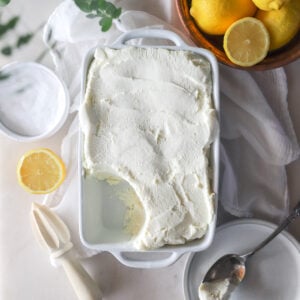
Quick Cream Cheese
This easy, acid-set cream cheese is made with raw or whole milk + lemon juice (no clabbering, no culture), and it's ready fast.
Equipment
- heavy bottomed pot
- Spoon or spatula for stirring
- Colander + large bowl
- Butter muslin or cheese cloth
- Food processor or blender
- Storage container
Ingredients
- 1 gallon whole milk raw or pasteurized
- 2 cups heavy cream
- ⅓ cup lemon juice
- 1½ teaspoon salt to taste
Instructions
- Pour the raw milk and cream into a heavy-bottomed pot.Heat over medium, stirring often, until the milk reaches a strong simmer — steamy with small bubbles around the edges, but not boiling. Tip: If you boil it hard, you’ll still get curds… but the texture will get tougher and the flavor can taste a bit off.
- Reduce heat to low. Add the lemon juice or vinegar very slowly and stir well. Stop once thick white curds form and the liquid turns yellowish and clear.
- Turn off the heat and let the pot sit undisturbed for 10 minutes to allow the curds to fully set.
- Line a colander with butter muslin or a double layer of cheesecloth and set it over a bowl. Carefully pour in the curds and whey. Let drain 15–20 minutes for a softer spread, or up to 45 minutes for a thicker cream cheese.
- Transfer the drained curds to a food processor or blender.Add salt and blend for 3–4 minutes, scraping down the sides as needed, until smooth and creamy. If the texture is too thick or grainy, add 1–3 tablespoons reserved whey (or clabber, kefir or yogurt) and blend again.
- Spoon into a container and refrigerate for at least 1 hour. The texture will firm up as it chills.
Notes
Troubleshooting
- "My milk didn't curdle." Most likely: not hot enough, or not enough acid. Bring it back to a strong simmer (not boil), then add a bit more acid slowly.
- "My curds are tiny." Usually from adding the acid too quickly or stirring too aggressively. It will still work, but may take a bit longer to blend smooth.
- "It tastes too lemon/vinegary." Next time, go slower with the acid and stop as soon as you get a clear separation. Also, chilling will help mellow the flavor.
- "It's too thick." Add a tablespoon of whey, kefir, yogurt, or clabber and blend again.
- "It's too thin." Drain longer (easy fix!). You can also stir it and let it chill longer to help thicken up.
Nutrition
Serving: 28gCalories: 163kcalCarbohydrates: 8gProtein: 6gFat: 12gSaturated Fat: 7gPolyunsaturated Fat: 0.5gMonounsaturated Fat: 3gCholesterol: 41mgSodium: 211mgPotassium: 259mgFiber: 0.01gSugar: 8gVitamin A: 547IUVitamin C: 1mgCalcium: 207mgIron: 0.02mg
Tried this recipe?Share it with us @NinnescahHomestead