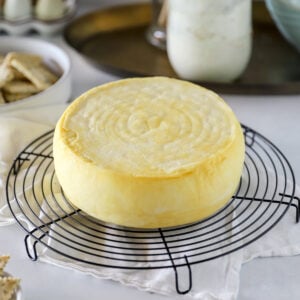
How to Make Gouda Cheese
Learn how to make Gouda cheese at home with this step-by-step recipe. This traditional washed-curd method creates a smooth, creamy cheese that’s perfect for aging and beginner-friendly.
Equipment
- Large stainless steel pot
- thermometer
- slotted spoon
- Long knife or curd cutter
- cheese cloth
- Cheese mold and follower
- Cheese press & drip tray
Ingredients
Cheese
- 2 gallons whole milk raw or pasteurized, but NOT ultra-pasteurized
- ⅛ teaspoon starter culture
- ¼ teaspoon calcium chloride not needed if using raw milk
- ¼ teaspoon rennet liquid veal calf rennet recommended
Cheese Brine
- ½ gallon water water
- 1 pound salt kosher or cheese salt
- ½ teaspoon calcium chloride
- 1 teaspoon white vinegar
Instructions
Making the Cheese
- Heat and Culture the Milk. Heat milk to 88°F, then add starter culture. Let it bloom (aka float on top) for 5 minutes and then gently stir it in. Wait 45-60 minutes before moving on to the next step.
- Add Calcium Chloride and Rennet. Add calcium chloride (if using pasteurized milk). Dilute the rennet in ¼ cup of water and stir it in, using a gentle up and down motion. Let sit undisturbed for 45 minutes until a clean break forms (see picture below). If a clean break isn't achieved yet, cover and let rest an additional 15 minutes before trying again.
- Cut the Curds. Cut into ½-inch cubes and let rest for 5–10 minutes. I use a whisk (it's so much easier!) and my curds are always smaller, and it works just fine! Let the curds sit 10 minutes before moving onto the next step. While the curds are resting, heat a pot of water to 170°F.
- Wash the Curds. Drain off about ⅓ of the whey, then replace it with warm water (around 170°F). Give the warmed curds a stir, then let them rest for 10 minutes. Repeat the washing/draining/resting process (about 3-4 more times) until the curds reach 100°F. The goal is raising the temperature slow and steady. This slow warming process should take about 25 minutes.
- Let the Curds Rest. Cover the pot of curds and let them sit for 30 minutes before continuing onto the next step.
- Strain the Curds. The curds should be small, firm, and springy. If not, stir them for a minute and then let rest for another 15 minutes. Otherwise, strain the curds into a cheesecloth lined mesh colander.
Pressing
- Transfer to Mold. Place curds into a lined cheese mold. Use your hands to break up the curds so that they fill the mold without any voids. Place the follower on the mold.
- Pressing schedule:20 minutes at ~20 poundsFlip1 hour at ~40 poundsFlip1 hour at ~40 pounds
Brining
- Dissolve salt in boiling water. Add calcium chloride and vinegar to keep the brine balanced and protect the texture of the cheese while it soaks. Let the brine cool to room temperature before using.
- Brine for 6-8 hours for a 2 gallon wheel, 12–24 hours for larger wheelsFlip halfway through.
Drying
- After brining, allow the cheese to air dry for 2–3 days, or until the surface is completely dry to the touch. The best way to dry cheese is on the drip tray from the cheese press or on a bamboo mat.
Aging
- Then vacuum seal the cheese (my preferred method) or coat the cheese in wax to seal and protect it during aging. See note below for recommendations.
Notes
For best results, age Gouda at:
- 50–55°F, 80–85% humidity
- Note: I don’t age my cheeses in a traditional cheese cave. Instead, I vacuum seal the wheels and store them in my regular refrigerator. Because it’s colder, the aging process takes a bit longer, but it’s a simple, reliable method that consistently produces great results.
Nutrition
Calories: 151kcalCarbohydrates: 12gProtein: 8gFat: 8gSaturated Fat: 5gPolyunsaturated Fat: 0.3gMonounsaturated Fat: 2gCholesterol: 30mgSodium: 96mgPotassium: 379mgSugar: 12gVitamin A: 409IUCalcium: 310mg
Tried this recipe?Share it with us @NinnescahHomestead