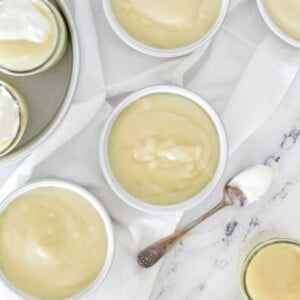
Homemade Vanilla Pudding
Homemade pudding is fast, easy and comes together with just six ingredients.
Equipment
- heavy stock pot
Ingredients
- 1 ½ cup sugar (297 grams)
- 6 tablespoons corn starch (66 grams)
- 6 cups whole milk (1,464 grams)
- 8 egg yolks
- 2 tablespoon butter
- 3 teaspoons vanilla extract
Instructions
- In a heavy saucepan or enameled 5 quart dutch oven, combine the sugar and cornstarch. Whisk in the milk. Continue stirring and cook over medium heat until thickened and bubbly. Cook 2 minutes more.
- Remove the mixture from the heat and gradually stir in one cup of the hot milk mixture into the egg yolks. Once the eggs are very hot, pour them into the milk mixture and whisk to combine. Bring it to a gentle boil and then reduce heat. Cook and stir for two more minutes.
- Remove from heat and stir in butter and vanilla. Pour the pudding into a bowl or two quart mason jars. Store in the refrigerator.
Notes
The Importance of Tempering Egg Yolks for Vanilla Pudding
Tempering the egg yolks is a crucial technique when making pudding, as it ensures a smooth and silky texture while preventing the yolks from curdling or scrambling due to sudden exposure to high heat.-
- To temper the yolks, begin by whisking them in a separate bowl. Gradually ladle a small amount of the hot milk mixture into the yolks while continuously whisking. This gradual addition raises the temperature of the yolks without shocking them, effectively bringing them to a similar temperature as the rest of the mixture.
-
- Once tempered, the yolks can be safely incorporated into the main pudding mixture without the risk of curdling.
How to keep pudding from scorching
Cooking pudding to perfection requires careful attention to prevent scorching, which can result in a burnt taste and undesirable texture. Follow these steps to ensure your pudding comes out creamy and delicious:-
- Low to Medium Heat: When cooking pudding, always use low to medium heat. High heat can cause the mixture to stick to the bottom of the pot and scorch. A heavy-bottomed saucepan is ideal for distributing heat evenly and minimizing the risk of scorching.
-
- Constant Stirring: Stirring the pudding mixture consistently is key to preventing scorching. Use a heat-resistant spatula or wooden spoon to gently stir the mixture in a figure-eight pattern or circular motion. This motion helps to evenly distribute heat and prevent any one area from becoming too hot.
-
- Constant Attention: Pudding can scorch quickly, so never leave it unattended. Stay by the stove and continue stirring until the mixture thickens to the desired consistency. This attentive approach prevents the mixture from sticking to the pot and burning.
-
- Adjust Heat as Needed: If you notice the pudding starting to stick to the bottom of the pot or if you see any signs of scorching, immediately reduce the heat and adjust your stirring technique. This proactive step can salvage the pudding and prevent further scorching.
-
- Remove from Heat Promptly: As soon as the pudding reaches the desired thickness, promptly remove it from the heat source. The residual heat will continue to cook the mixture slightly, and removing it from the stove prevents overcooking or scorching.
How to keep pudding from scorching
Cooking pudding to perfection requires careful attention to prevent scorching, which can result in a burnt taste and undesirable texture. Follow these steps to ensure your pudding comes out creamy and delicious:-
- Low to Medium Heat: When cooking pudding, always use low to medium heat. High heat can cause the mixture to stick to the bottom of the pot and scorch. A heavy-bottomed saucepan is ideal for distributing heat evenly and minimizing the risk of scorching.
-
- Constant Stirring: Stirring the pudding mixture consistently is key to preventing scorching. Use a heat-resistant spatula or wooden spoon to gently stir the mixture in a figure-eight pattern or circular motion. This motion helps to evenly distribute heat and prevent any one area from becoming too hot.
-
- Constant Attention: Pudding can scorch quickly, so never leave it unattended. Stay by the stove and continue stirring until the mixture thickens to the desired consistency. This attentive approach prevents the mixture from sticking to the pot and burning.
-
- Adjust Heat as Needed: If you notice the pudding starting to stick to the bottom of the pot or if you see any signs of scorching, immediately reduce the heat and adjust your stirring technique. This proactive step can salvage the pudding and prevent further scorching.
-
- Remove from Heat Promptly: As soon as the pudding reaches the desired thickness, promptly remove it from the heat source. The residual heat will continue to cook the mixture slightly, and removing it from the stove prevents overcooking or scorching.
Nutrition
Calories: 364kcalCarbohydrates: 52gProtein: 9gFat: 14gSaturated Fat: 7gPolyunsaturated Fat: 1gMonounsaturated Fat: 4gTrans Fat: 0.1gCholesterol: 224mgSodium: 102mgPotassium: 298mgFiber: 0.1gSugar: 47gVitamin A: 643IUCalcium: 250mgIron: 1mg
Tried this recipe?Share it with us @NinnescahHomestead