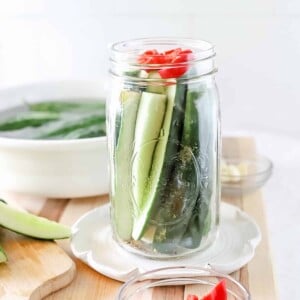
Dill Pickle Canning Recipe
Learn how to make delicious homemade pickles with this easy cucumber recipe! I'm sharing my expert tips for how to make cucumber pickle, achieving the perfect crunch, using a water bath canner, and more. Impress your taste buds (and friends!) when you pop open a jar of your very own dill pickles!
Equipment
- water bath canner
- jar lifter
- 6 quart mason jars, lids & rings
Ingredients
- 8 cups 5% distilled white vinegar
- 8 cups filtered water
- ¾ cups canning salt
- 12 cucumbers or ¼ bushel
- 2 bulbs garlic
- 6 teaspoons dill seeds
- 6 teaspoons mustard seeds
- 1-2 jalapeños optional
Instructions
- Prepare the cucumbers by washing them thoroughly under cool running water and trim off the ends if desired. I recommend soaking the pickles for thirty minutes in a sink or bucket filled with ice water before starting this recipe.
- Next, decide whether you prefer sliced pickles or pickle spears. Trim off both ends and any flawed areas. For slices, use a sharp knife or a mandolin slicer to cut the cucumbers into evenly sized rounds. If you prefer spears, slice the cucumbers lengthwise into quarters or eighths, depending on your desired thickness.
- In a non-reactive pot, bring the vinegar, water and canning salt to a boil. This is creating the brine. Heat until the brine and simmer until the salt has dissolved, about 2 minutes.
- Divide the dill, garlic, mustard, and jalapeños or banana peppers evenly between the quart jars. Add the cucumbers to the jar, fitting them snugly together. Your jar should be packed nice and tight!
- Ladle the hot brine into the jars using a funnel. Leave ½ inch of headspace. Use a chopstick or knife to release any air pockets in the jars. Wipe the rim with a paper towel and place the lid on the jar. Finger tighten the ring and use a jar lifter to lower the jar into the water bath canner. The jars need to be covered by at least one inch of water.
- Bring the water bath canner to a rolling boil and start a timer for 15 minutes for quart jars, or 10 minutes for pints*. Remove the jars from the canner and transfer them to a heat-safe surface, like a baking sheet lined with a towel. Leave them alone for 12 hours (or even 24 hours). Remove the rings and test the lid seals before labeling and storing.
- The dill pickles will taste best if they sit for 6-8 weeks before opening to taste. Once the jar has been opened, store the pickles in the refrigerator.
Notes
Processing Times Chart
| Jar size | 0–1,000 feet | 1,001–6,000 feet | Above 6,000 feet |
|---|---|---|---|
| Pints | 10 minutes | 15 minutes | 20 minutes |
| Quarts | 15 minutes | 20 minutes | 25 minutes |
Nutrition
Calories: 16kcalCarbohydrates: 3gProtein: 1gFat: 0.4gSaturated Fat: 0.03gPolyunsaturated Fat: 0.1gMonounsaturated Fat: 0.1gSodium: 12mgPotassium: 145mgFiber: 1gSugar: 1gVitamin A: 79IUVitamin C: 3mgCalcium: 22mgIron: 0.3mg
Tried this recipe?Share it with us @NinnescahHomestead